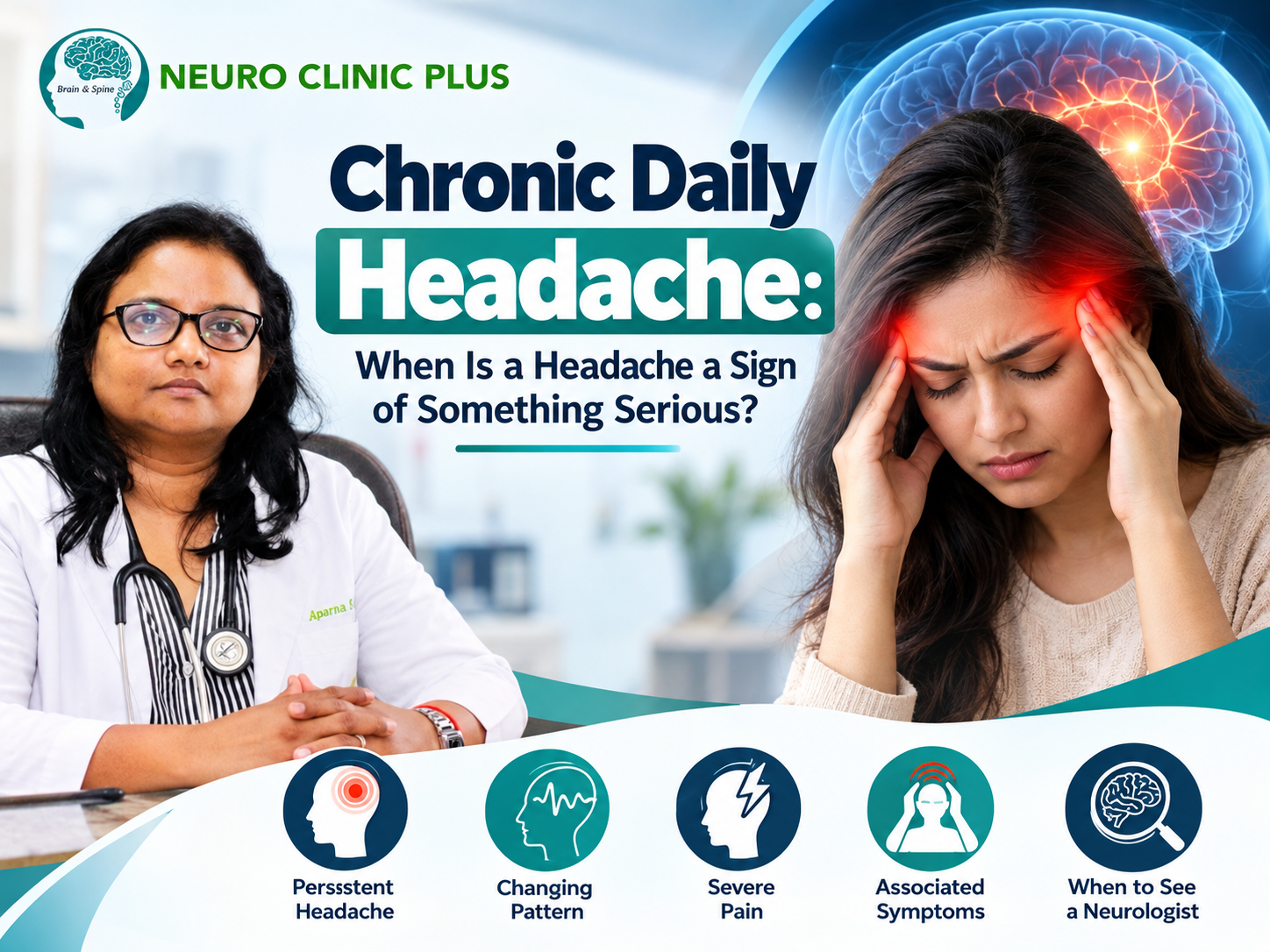
Experiencing a headache occasionally is common, but when head pain occurs almost every day, interferes with work, or affects sleep and daily activities, it deserves closer attention. Understanding chronic headache causes can help people identify possible triggers, recognise patterns, and determine when professional medical evaluation may be necessary. Frequent headaches may be associated with migraine, tension-type headaches, sleep disturbances, stress, or frequent use of pain-relief medicines.
Although many recurring headaches are not caused by dangerous conditions, some symptoms require urgent medical attention. recognise red flag headache symptoms and understanding when to worry about headache can help you seek timely care. This guide explains common causes, warning signs, treatment approaches, and when to consult a neurologist.
What Is a Chronic Daily Headache?
A chronic daily headache is a term used for headaches that occur frequently, generally on 15 or more days per month for longer than three months. It describes a pattern rather than one specific disease.
The characteristics of a daily headache can vary from person to person. Some people experience continuous, dull pressure, while others have severe episodes accompanied by nausea, light sensitivity, or throbbing pain.
Common patterns include:
- Chronic migraine
- Chronic tension-type headache
- New daily persistent headache
- Medication overuse headache
- Headaches associated with other medical conditions
Identifying the headache pattern is an important step toward choosing an appropriate treatment.
What Are the Common Chronic Headache Causes?
There are several possible chronic headache causes, and more than one factor may contribute to recurring pain. A detailed medical history can help distinguish a primary headache disorder from a headache caused by another condition.
1. Chronic Migraine
Chronic migraine can cause repeated episodes of moderate to severe head pain. The pain may be throbbing and may affect one or both sides of the head.
Other symptoms can include:
- Nausea or vomiting
- Sensitivity to light and sound
- Worsening pain with routine physical activity
- Difficulty concentrating
- Visual disturbances in some people
Migraine symptoms and frequency can vary, so a clinician may recommend preventive treatment when headaches occur frequently.
2. Tension-Type Headaches
Tension-type headaches often feel like pressure or tightness around the forehead, temples, or back of the head. They may be associated with stress, poor sleep, muscle tension, or prolonged periods in one position.
Unlike some migraine attacks, tension-type headaches generally do not cause prominent nausea, although symptoms can overlap.
3. Medication Overuse Headache
Taking headache medicines too frequently can sometimes make headaches more persistent. This is known as medication overuse headache.
Medicines associated with this problem include certain painkillers, combination headache medicines, triptans, and opioids. The risk depends on the medicine and how frequently it is used.
Possible warning patterns include:
- Headaches becoming more frequent over time
- Relief lasting for shorter periods
- Increasing reliance on pain-relief medicines
- Headaches returning as the effect of medication wears off
Do not abruptly stop prescribed medication without medical guidance. A doctor can help develop a safe plan to reduce medication overuse and manage the underlying headache disorder.
4. Poor Sleep and Stress
Irregular sleep schedules, insufficient rest, stress, and anxiety may contribute to recurring headaches. Skipping meals, dehydration, and excessive caffeine or sudden caffeine withdrawal may also trigger symptoms in some individuals.
Keeping a consistent sleep schedule, drinking enough water, eating regular meals, and identifying personal triggers can support headache management.
5. Neck-Related Problems
Muscle tension, certain cervical spine conditions, and restricted neck movement may contribute to headaches in some people. Pain that begins in the neck and travels toward the back of the head may require an assessment of the neck and nervous system.
However, not every headache accompanied by neck pain originates from the cervical spine.
6. Other Medical Conditions
Less commonly, a persistent headache may be associated with conditions such as an infection, abnormal pressure inside the skull, blood vessel problems, or another underlying disorder.
These causes cannot be identified reliably from symptoms alone. Medical assessment is particularly important when a headache is new, progressively worsening, or accompanied by unusual symptoms.
Comparison Table: Common Headache Patterns
| Headache type | Typical features | When to seek medical advice |
| Migraine | Throbbing pain, nausea, light or sound sensitivity | Frequent attacks, worsening symptoms, or disruption to daily life |
| Tension-type headache | Pressure or tightness around the head | Persistent pain or increasing frequency |
| Medication overuse headache | Frequent headaches with regular use of acute headache medicines | When painkillers are needed repeatedly |
| Neck-related headache | Pain associated with neck discomfort or movement | Persistent pain, restricted movement, or neurological symptoms |
| Headache from a secondary cause | Features vary depending on the underlying condition | New, severe, progressive, or unusual symptoms require assessment |
These patterns are general descriptions, not a way to diagnose yourself. Different headache disorders can produce overlapping symptoms.
Red Flag Headache Symptoms You Should Never Ignore
Most recurring headaches are not medical emergencies. However, recognizing red flag headache symptoms is essential because some headaches can signal a serious underlying problem.
Seek emergency medical care if you experience any of the following:
- Sudden, extremely severe headache: Pain that reaches its maximum intensity within seconds or a minute.
- New weakness or numbness: Especially on one side of the body, or difficulty speaking, walking, or understanding speech.
- Confusion or loss of consciousness: A headache accompanied by fainting, seizures, or a significant change in alertness.
- Fever with a stiff neck: Particularly when accompanied by a rash, confusion, or severe illness.
- Headache after a significant head injury: Especially with vomiting, confusion, drowsiness, or worsening pain.
- Sudden vision loss or a painful red eye: These symptoms need urgent assessment.
Some other situations also warrant prompt medical evaluation, including a new or progressively worsening headache, a headache beginning after age 50, or a headache during pregnancy or shortly after delivery. People with cancer or a weakened immune system should also seek timely advice for a new or unusual headache.
Do not wait for a routine appointment if emergency warning signs are present.
When to Worry About Headache That Happens Every Day
Knowing when to worry about a headache involves considering its frequency, severity, duration, and associated symptoms—not just the intensity of pain.
Arrange a medical appointment if:
- You experience headaches on most days of the month.
- Your usual headache pattern changes significantly.
- Headaches repeatedly wake you from sleep or progressively worsen.
- You regularly need painkillers to continue normal activities.
- Headaches interfere with work, school, sleep, or family life.
- You experience persistent vomiting or new visual symptoms.
A headache that has become more frequent deserves attention even if each episode feels relatively mild. Early assessment can help identify contributing factors and reduce the risk of ongoing disability.
How Are Chronic Daily Headaches Diagnosed?
There is no single test that diagnoses every chronic headache disorder. A clinician usually begins with a detailed history and physical examination.
Medical History
Your doctor may ask about:
- When the headaches started
- How many days each month they occur
- Where the pain is located and how it feels
- Whether nausea, light sensitivity, or visual symptoms occur
- Sleep patterns, stress, and possible triggers
- Prescription medicines and over-the-counter painkillers
- Any recent injury or significant change in health
Physical and Neurological Examination
The examination may include checking blood pressure, vision-related symptoms, neck movement, balance, reflexes, strength, and sensation.
Tests When Needed
Depending on the findings, further investigations may include:
- MRI or CT scans: When symptoms or examination findings suggest a secondary cause.
- Blood tests: If an infection, inflammation, or another medical condition is suspected.
- Other targeted investigations: Depending on the suspected diagnosis and clinical circumstances.
Brain imaging is not necessary for every person with a recurring headache. The decision depends on the medical history, examination, and presence of warning signs.
Treatment Options for Chronic Daily Headache
Treatment depends on the type of headache, its frequency, other medical conditions, and how it affects daily life.
1. Acute Treatment
A clinician may recommend appropriate medicines to relieve an individual headache episode. The choice depends on the diagnosis, medical history, and other medicines being taken.
Frequent use of acute medication should be reviewed because it can contribute to medication overuse of headache.
2. Preventive Treatment
When headaches occur frequently or significantly affect quality of life, preventive treatment may be considered. Depending on the headache disorder, options may include specific prescription medicines, migraine-targeted treatments, or other evidence-based approaches.
Preventive medicines should be selected and monitored by a qualified clinician.
3. Lifestyle Management
Daily habits can complement medical treatment. Helpful steps may include:
- Maintaining regular sleep and wake times
- Eating meals at consistent times
- Staying adequately hydrated
- Gradually managing caffeine intake
- Engaging in suitable physical activity
- Practising relaxation techniques
- Taking breaks from prolonged screen use when it triggers symptoms
4. Keeping a Headache Diary
A headache diary can help reveal patterns and assess whether treatment is working.
Record the date, duration, severity, associated symptoms, possible triggers, and medicines taken. This information can make consultations more productive.
How Can You Reduce the Risk of Frequent Headaches?
Not every headache can be prevented, but certain habits may help reduce the frequency of attacks.
- Follow a consistent sleep schedule.
- Avoid skipping meals.
- Identify individual food, environmental, or lifestyle triggers without adopting unnecessary dietary restrictions.
- Use pain-relief medicines according to medical advice.
- Manage stress through practical relaxation techniques.
- Attend follow-up appointments if headaches remain frequent.
- Seek medical advice when symptoms change or become more severe.
The goal is not simply to suppress pain but to understand its cause, improve daily functioning, and prevent avoidable complications.
About Dr. Aparna Gupta and Neuro Clinic Plus
Dr. Aparna Gupta is a neurologist associated with Neuro Clinic Plus in Safdarjung Enclave, New Delhi. Her qualifications include MBBS, MD in General Medicine, and DNB in Neurology. She is also associated with ISIC Multispeciality Hospital in a neurology leadership role.
Her clinical areas of interest include neurological conditions such as migraine and other headache disorders, epilepsy, stroke, vertigo, movement disorders, and peripheral neuropathy.
For people experiencing persistent headaches, a neurological consultation may help clarify the headache pattern, assess possible contributing factors, and determine whether further investigations or preventive treatment are appropriate.
Frequently Asked Questions (FAQs)
1. What are the most common chronic headache causes?
Common causes include chronic migraine, tension-type headaches, medication overuse, irregular sleep, stress, and other contributing health conditions. A medical assessment can help identify the likely cause.
2. Is having a daily headache always a sign of a serious illness?
No. Many daily headaches are associated with primary headache disorders or medication overuse. However, a new, worsening, or unusual headache should be evaluated, particularly when warning signs are present.
3. What are the main red flag headache symptoms?
Sudden severe pain, new weakness, difficulty speaking, confusion, seizures, fever with a stiff neck, sudden vision loss, and headache after significant head trauma are important warning signs that may require emergency care.
4. When should I worry about a headache?
Seek medical advice if headaches become frequent, progressively worsen, change in character, or interfere with everyday life. Sudden severe headaches and headaches with neurological symptoms require emergency assessment.
5. Can taking painkillers every day cause headaches?
Yes. Frequent use of certain headache medicines can contribute to medication overuse headache. A clinician can help review medicine use and develop an appropriate treatment plan.
6. How is chronic migraine different from a tension-type headache?
Migraine often involves moderate to severe pain, nausea, and sensitivity to light or sound. Tension-type headaches commonly feel like pressure or tightness. Symptoms can overlap, so professional assessment may be necessary.
7. Can stress cause daily headaches?
Stress may trigger or worsen headaches in some people. Sleep disturbances, muscle tension, and changes in daily routines may also contribute. Persistent headaches should not automatically be attributed to stress without considering other causes.
8. Can dehydration cause headaches?
Yes. Inadequate fluid intake can contribute to headaches in some people. Drinking fluids regularly may help when dehydration is a factor, but persistent or severe headaches need appropriate assessment.
9. Do chronic headaches always require an MRI or CT scan?
No. Imaging is not routinely necessary for every recurring headache. A clinician decides whether imaging or other tests are appropriate based on symptoms, medical history, and examination findings.
10. How can I prevent daily headaches?
Consistent sleep, regular meals, adequate hydration, trigger awareness, appropriate physical activity, and careful use of headache medicines may help. Some people also need preventive medical treatment.
11. Can a chronic headache be treated successfully?
Many headache disorders can be managed with an individualized treatment plan. Results vary depending on the diagnosis, contributing factors, treatment choice, and consistency of follow-up.
12. Which doctor should I consult for persistent headaches?
A primary care doctor or neurologist can assess persistent headaches and recommend treatment. A neurologist may be particularly helpful when headaches are frequent, difficult to control, associated with unusual symptoms, or require specialist preventive care.
Conclusion
Chronic daily headaches should not be ignored simply because they have become part of your routine. Understanding chronic headache causes, recognizing red flag headache symptoms, and knowing when to worry about headache can help you make informed decisions about your health.
Although migraine, tension-type headaches, lifestyle factors, and medication overuse are common explanations, persistent or changing symptoms deserve proper evaluation. Keeping a headache diary, reviewing frequent painkiller use with a clinician, and following an individualized treatment plan can help improve headache control and quality of life.
If your headaches are becoming more frequent or interfering with everyday activities, arrange a medical evaluation. If you experience a sudden, extremely severe headache or neurological warning signs, seek emergency medical care immediately.