📍 B4/18, Safdarjung Enclave, New Delhi  |  ✉️ doctoraparnagupta@gmail.com
📞 9205022311 | 011-35689185 Book Appointment
✉️ doctoraparnagupta@gmail.com 📞 9205022311
Book Appointment
Home / Specializations / Stroke

Best Stroke Treatment in South Delhi

Dr. Aparna Gupta | M.B.B.S., MD, DNB (Neurology) — stroke evaluation, post-stroke neurological care, rehabilitation planning and recurrent-stroke prevention at Neuro Clinic Plus, Safdarjung Enclave.

Stroke Treatment in South Delhi: Evaluation, Recovery & Prevention

Stroke is a medical emergency. Sudden facial drooping, arm weakness, speech difficulty, loss of balance or new vision changes require immediate emergency assessment. Routine clinic consultation should not delay emergency hospital care.

For patients searching for the Best Stroke Treatment in South Delhi, treatment depends on whether the stroke is ischemic or hemorrhagic, when symptoms started, brain-imaging findings, neurological deficits and the patient's overall medical condition. There is no single treatment that is appropriate for every stroke.

At Neuro Clinic Plus, Safdarjung Enclave, neurologist Dr. Aparna Gupta provides consultation for stroke evaluation, post-stroke neurological follow-up, recovery and rehabilitation planning, review of recurrent symptoms and strategies to reduce the risk of another stroke.

A stroke occurs when blood flow to part of the brain is blocked or when a blood vessel ruptures and causes bleeding. Early recognition and rapid diagnosis are important because the treatment pathway differs between ischemic stroke and hemorrhagic stroke.

Stroke Care at a Glance

From neurological assessment and diagnosis to post-stroke follow-up, rehabilitation planning and secondary prevention, care is individualized to the patient's clinical needs.

01

Stroke Evaluation

Assessment of symptoms, medical history and neurological findings.

02

Stroke Diagnosis

Clinical evaluation with brain imaging and other investigations when required.

03

Treatment Planning

Management depends on whether the stroke is ischemic, hemorrhagic or another neurological event.

04

Recovery & Prevention

Follow-up care, rehabilitation planning and measures to reduce future stroke risk.

UNDERSTANDING STROKE

Ischemic Stroke vs Hemorrhagic Stroke

The distinction between ischemic and hemorrhagic stroke is clinically important because the treatment pathway is different for each type.
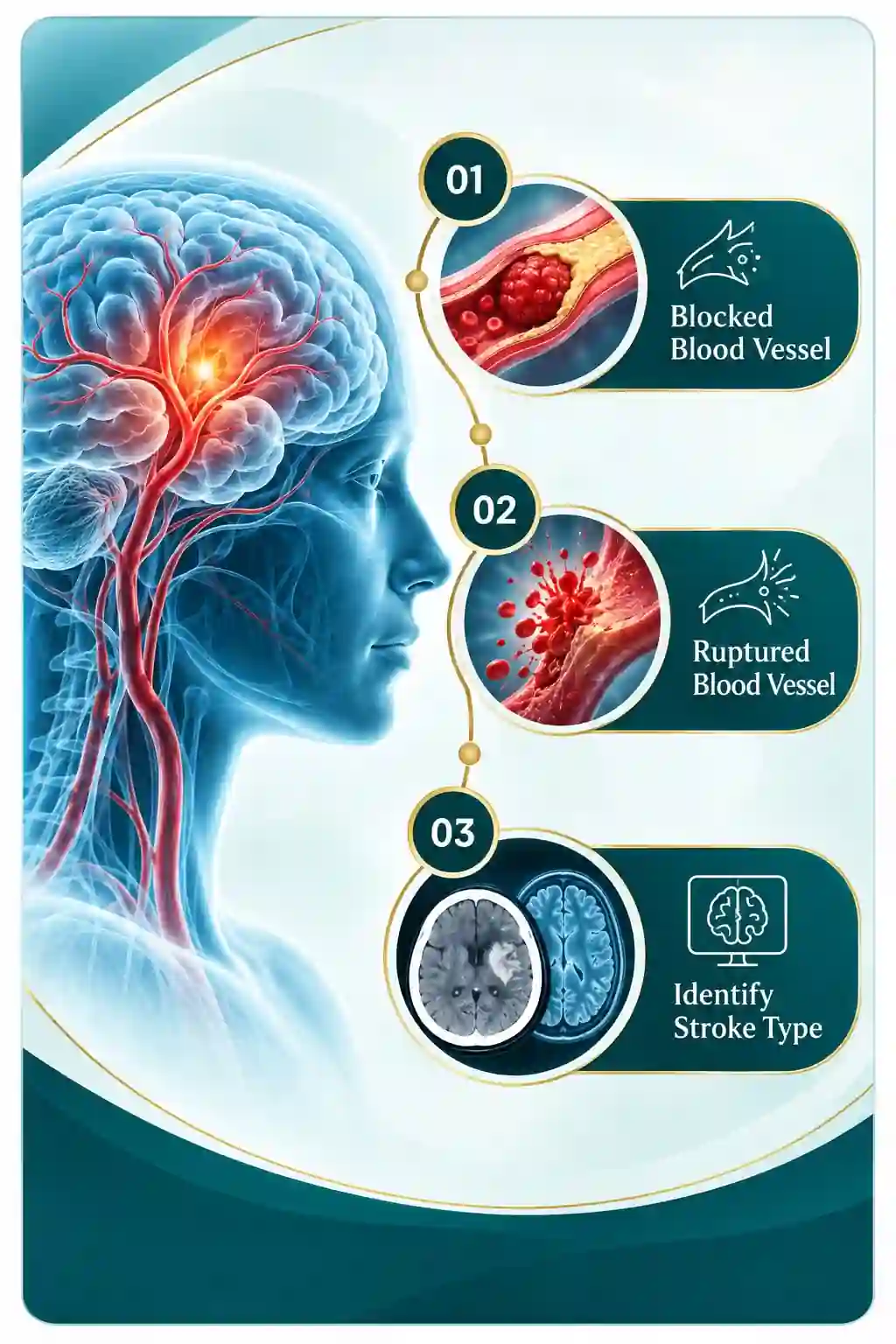
Ischemic and hemorrhagic stroke types explained
01ISCHEMIC STROKE

Blocked Blood Vessel

Occurs when a blood vessel supplying the brain becomes blocked, reducing or stopping blood flow and oxygen reaching part of the brain. Causes may include a blood clot or narrowing of an artery. Some eligible patients may require urgent clot-directed treatment, and CT or MRI along with other investigations help determine the diagnosis and treatment pathway.

02HEMORRHAGIC STROKE

Ruptured Blood Vessel

Occurs when a blood vessel in or around the brain ruptures and bleeds. Bleeding can damage surrounding brain tissue and may increase pressure within the skull. Treatment focuses on controlling the bleeding, pressure and underlying cause; some cases may require specialist or surgical intervention.

03WHY IT MATTERS

Identifying the Type of Stroke

Rapid neurological assessment and brain imaging help the medical team determine what has happened and which treatment options may be appropriate. Identifying the type, possible cause and neurological effects of the stroke is an important part of ongoing care.
Stroke Symptoms: Recognize B.E. F.A.S.T.

Knowing these early warning signs can help you act quickly and reach emergency care without delay.

B

B — Balance

Sudden loss of balance, coordination or difficulty walking.

E

E — Eyes

Sudden blurred vision, double vision or loss of vision.

F

F — Face

One side of the face may droop or become numb.

A

A — Arm

Sudden weakness or numbness, particularly on one side.

S

S — Speech

Slurred speech, difficulty speaking or difficulty understanding speech.

T

T — Time

Time is critical. Seek emergency medical care immediately. Other sudden symptoms can include confusion, severe unexplained headache or other new neurological changes.

Stroke Recovery & Rehabilitation

Stroke recovery varies from person to person. Rehabilitation needs should be assessed according to the individual's neurological deficits and functional goals, and may include:

  • Physiotherapy for movement, strength and functional recovery
  • Occupational therapy to help regain independence in daily activities
  • Speech and language therapy for communication difficulties
  • Swallowing assessment when stroke has affected swallowing
  • Mobility and balance training to improve walking and stability
  • Cognitive support for cognitive changes after stroke
  • Caregiver guidance and management of post-stroke complications

Recovery planning should be individualized according to neurological findings, functional needs and long-term recovery goals after stroke.

Important

For sudden or recurrent stroke symptoms, seek emergency medical care immediately rather than waiting for a routine clinic appointment.

Stroke recovery and rehabilitation planning

How Is Stroke Diagnosed?

Stroke diagnosis generally involves urgent neurological assessment, brain imaging and other tests when clinically appropriate. Identifying whether the event is ischemic or hemorrhagic is essential because the treatment pathways differ. For patients who need ongoing stroke care in South Delhi, follow-up planning is guided by symptoms, imaging findings, the suspected cause and neurological recovery.

01

Symptoms & Onset Time

Neurological symptoms and the time of symptom onset are assessed first.

02

Vitals & Severity

Blood pressure, vital signs and neurological severity are evaluated.

03

Tests & Brain Imaging

Blood glucose, relevant laboratory tests and CT or MRI brain imaging are performed. Additional vascular or perfusion imaging may be considered depending on the clinical situation.

04

Vessels & Underlying Cause

Blood vessels are assessed with additional vascular imaging when needed, along with possible underlying causes of stroke.

Stroke Treatment in South Delhi: A Cause-Based Approach

The right stroke treatment depends on the type of stroke, the location and severity of brain injury, the time since symptoms began, imaging findings and the patient's overall medical condition. People searching for the Best Stroke Treatment in South Delhi should prioritize rapid emergency care for new symptoms and specialist follow-up for recovery and prevention.

01

Thrombolysis

Intravenous thrombolytic medication may be considered for selected patients with acute ischemic stroke when they meet clinical, imaging and time-based eligibility criteria. This is an emergency-hospital treatment decision.

02

Mechanical Thrombectomy

A catheter-based procedure may be used to remove a clot in selected patients with an eligible large-vessel occlusion. Suitability depends on urgent specialist assessment and brain and vascular imaging.

03

Supportive Stroke Care

Patients may also require monitoring and management of complications and evaluation of the underlying cause. Treatment eligibility is individualized.

04

Hemorrhagic Stroke Management

Management may involve controlling bleeding, blood pressure and intracranial pressure, identifying the underlying cause and involving neurosurgical or other specialist teams when required.

Preventing Another Stroke

After a stroke or TIA, identifying the underlying cause is an important part of reducing future risk. The appropriate prevention strategy should be individualized after neurological and medical evaluation.

High Blood PressureEvaluation and control of blood pressure as part of stroke risk reduction.
DiabetesAssessment and management of blood sugar in relation to stroke risk.
CholesterolReview and management of cholesterol levels when relevant.
SmokingAddressing smoking as a modifiable stroke risk factor.
Heart Rhythm DisordersEvaluation of heart rhythm problems that may contribute to stroke.
Blood-Vessel Disease & Other Risk FactorsAssessment of blood-vessel disease and other individual stroke risk factors.

Neurologist for Stroke Care in South Delhi

At Neuro Clinic Plus in Safdarjung Enclave, stroke consultations focus on individualized neurological assessment, review of symptoms and available imaging, post-stroke follow-up and recovery needs.

Dr. Aparna Gupta provides neurological consultation for people recovering after stroke, patients with persistent neurological symptoms, and those who need evaluation of stroke risk factors or recurrent symptoms.

Patients comparing options for a stroke doctor in South Delhi can use clinical qualifications, relevant neurological experience, accessibility for follow-up and the suitability of the care setting for their needs when choosing a specialist.

Dr. Aparna Gupta
M.B.B.S., MD, DNB (Neurology)

Neurological consultation at Neuro Clinic Plus.

22+ Years Experience

Clinical neurological experience.

MD · DNB Neurology

Specialist neurological qualifications.

Fellowship Epilepsy, Sleep & Botox

Additional fellowship training in neurology.

ISIC Multispeciality Hospital

Clinical neurology practice at ISIC Multispeciality Hospital.

Related Neurological Care

Stroke Doctor in South Delhi — Safdarjung Enclave

Neuro Clinic Plus is located at B4/18, Safdarjung Enclave, New Delhi. Patients looking for a Stroke Doctor in South Delhi can book a neurological consultation with Dr. Aparna Gupta for post-stroke follow-up, review of neurological symptoms, recovery planning and secondary stroke prevention.

Neurological follow-up may include review of the likely stroke mechanism, available brain imaging, residual weakness or speech problems, balance or cognitive changes, medication-related questions, rehabilitation needs and risk factors for recurrent stroke.

If you are searching for the Best Stroke Treatment in South Delhi, remember that new or recurrent stroke symptoms require emergency hospital care immediately. Clinic appointments are appropriate for non-emergency neurological consultation, follow-up and longer-term stroke management.

Book an Appointment

Neuro Clinic Plus

📍 B4/18, Safdarjung Enclave, New Delhi

Frequently Asked Questions About Stroke

A stroke occurs when blood flow to part of the brain is blocked or when a blood vessel ruptures and causes bleeding. The type of stroke must be identified because treatment differs between ischemic and hemorrhagic stroke.
Sudden facial drooping, arm or leg weakness, speech difficulty, vision changes, balance problems, confusion or a severe unexplained headache can be warning signs. B.E. F.A.S.T. can help people recognize common symptoms.
Seek emergency medical care immediately. Note the time symptoms started, or the last time the person was known to be well. Do not wait for symptoms to disappear.
An ischemic stroke results from a blocked blood vessel, while a hemorrhagic stroke results from bleeding caused by a ruptured blood vessel. Their treatment approaches are different.
Brain imaging is an important part of stroke evaluation. CT is commonly used during urgent assessment, while MRI and additional imaging may be used depending on the clinical situation and treatment decisions.
Some eligible patients with acute ischemic stroke may receive intravenous thrombolytic treatment. Eligibility depends on factors including symptom timing, clinical findings and imaging.
Mechanical thrombectomy is a catheter-based procedure used to remove a clot from a blocked brain artery in selected patients, particularly those with certain large-vessel occlusions.
Recovery varies depending on the type and severity of stroke, the affected area of the brain and other individual factors. Rehabilitation can play an important role in functional recovery.
Neurological follow-up may be appropriate for reviewing the stroke cause, medications, neurological symptoms, recovery, complications and strategies for reducing future risk.
For non-emergency stroke follow-up, Neuro Clinic Plus in Safdarjung Enclave provides neurological consultation with Dr. Aparna Gupta for post-stroke symptoms, recovery planning and recurrent-stroke prevention. If stroke symptoms are new or sudden, seek emergency hospital care immediately rather than waiting for a clinic appointment.
💬 WhatsApp 📅 Appointment