
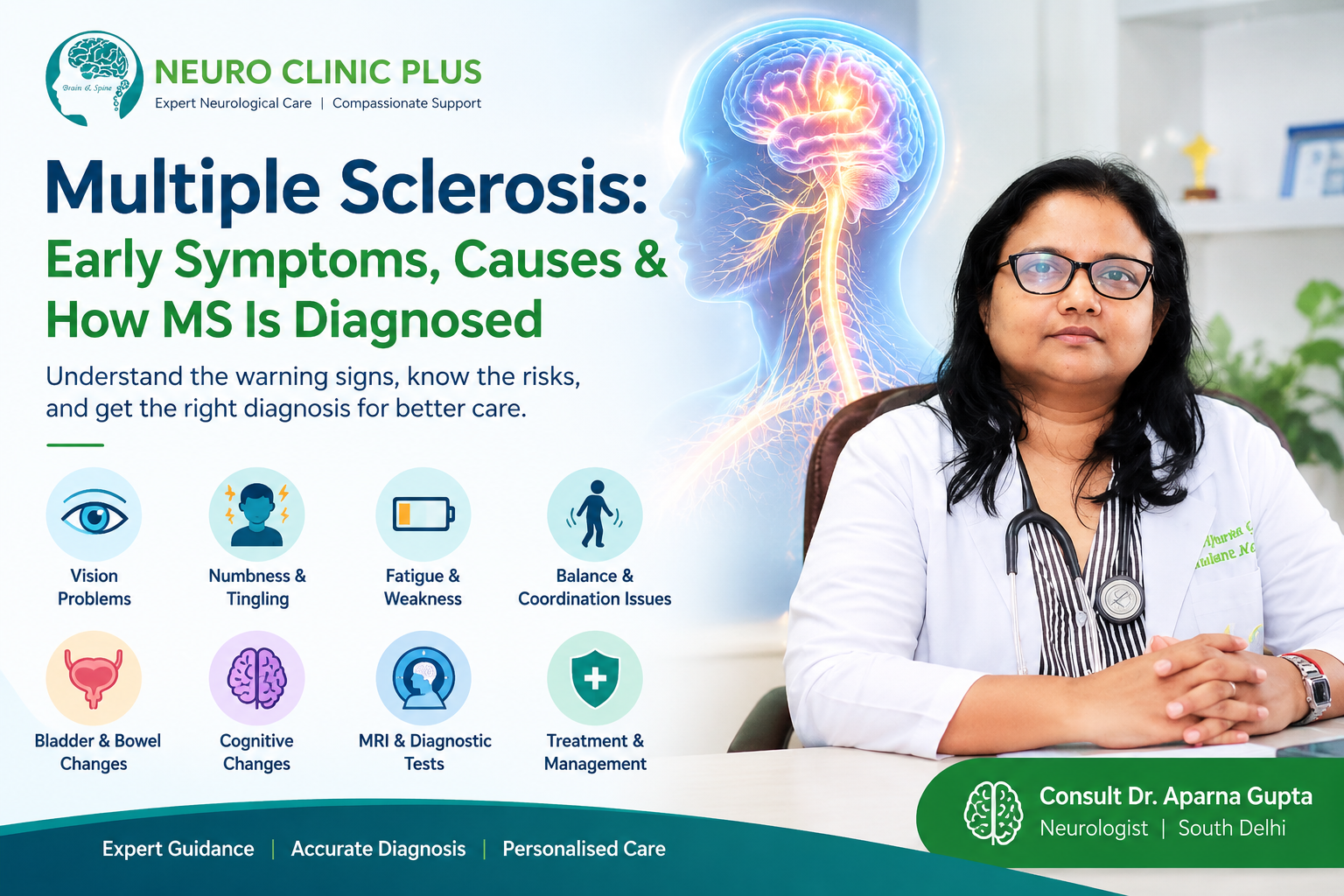
Have you ever experienced unexplained numbness, persistent fatigue, blurred vision, or difficulty maintaining your balance? Although these symptoms can occur for many reasons, they may sometimes indicate an underlying neurological condition. One such condition is multiple sclerosis (MS), a disease that affects the brain, spinal cord, and optic nerves.
Recognising multiple sclerosis symptoms early can help patients seek appropriate medical evaluation and understand their treatment options. However, MS symptoms vary from person to person, and experiencing one or more of them does not automatically mean someone has MS.
In this guide, we explain the early symptoms of multiple sclerosis, possible causes, diagnostic tests, and treatment approaches, along with guidance on when to consult a neurologist.
What Is Multiple Sclerosis and How Does It Affect the Body?
Multiple sclerosis is a chronic disease of the central nervous system. It develops when the immune system mistakenly attacks myelin, the protective covering surrounding nerve fibres in the brain and spinal cord.
Myelin helps electrical signals travel efficiently between the brain and the rest of the body. When myelin is damaged, communication between nerve cells can become disrupted, leading to different neurological symptoms.
The effects depend on which areas of the nervous system are affected and how much damage occurs.
There are different patterns of MS, including relapsing-remitting multiple sclerosis, which involves episodes of new or worsening symptoms followed by periods of recovery, and progressive forms in which disability gradually increases.
Important point: Multiple sclerosis affects everyone differently. Some people experience relatively mild symptoms for years, while others may develop more significant difficulties with movement, vision, or daily activities.
Multiple Sclerosis Symptoms: Early Warning Signs to Recognise
The early symptoms of MS can be subtle and may initially resemble other neurological or general health conditions. Symptoms often depend on the location of inflammation and nerve damage.
1. Vision Problems
Vision changes can be among the first noticeable signs of multiple sclerosis. Some people develop optic neuritis, an inflammation of the optic nerve.
Possible symptoms include:
- Blurred or reduced vision, usually in one eye.
- Pain that becomes worse when moving the affected eye.
- Colours appear less vivid than usual.
- Temporary or persistent changes in visual clarity.
Sudden vision loss requires urgent medical assessment rather than assuming that MS is the cause.
2. Numbness and Tingling
Unusual sensations in the face, arms, hands, legs, or feet can occur when MS affects sensory nerve pathways.
People may describe these sensations as pins and needles, reduced sensitivity, or a feeling of numbness. However, numbness and tingling are not specific to multiple sclerosis. Vitamin B12 deficiency, diabetes, and nerve compression can cause similar problems.
3. Persistent Fatigue and Muscle Weakness
Fatigue is a common symptom of MS. It may feel different from ordinary tiredness after a busy day and can interfere with work, concentration, and everyday activities.
Muscle weakness may also make walking, climbing stairs, or holding objects more difficult.
4. Balance Problems and Dizziness
When MS affects areas responsible for coordination and balance, a person may experience unsteadiness, difficulty walking, or poor coordination.
Dizziness and vertigo can also occur for many other reasons, including inner-ear disorders and vestibular migraine. A proper evaluation helps identify the likely cause.
5. Bladder, Bowel, and Cognitive Changes
Other possible multiple sclerosis symptoms include urinary urgency, difficulty emptying the bladder, constipation, difficulty concentrating, and problems with memory or information processing.
Not everyone with MS develops these symptoms, and they can also occur in other conditions.
Do Multiple Sclerosis Symptoms Come and Go?
Yes. In relapsing-remitting MS, new symptoms or a clear worsening of existing symptoms may develop over several hours or days and subsequently improve over weeks or months. Some symptoms may resolve completely, while others can persist.
In progressive forms of MS, symptoms may worsen gradually. The pattern alone cannot confirm a diagnosis.
When to seek medical advice: Consult a neurologist if you experience persistent, recurrent, or unexplained neurological symptoms. Sudden weakness, facial drooping, difficulty speaking, or sudden vision loss requires emergency assessment because these symptoms can indicate a stroke or another urgent condition.
Multiple Sclerosis Causes: Why Does MS Develop?
The exact causes of multiple sclerosis are not fully understood. Researchers believe the condition develops through a combination of immune, genetic, and environmental influences.
MS is generally considered an immune-mediated disease because the immune system damages components of the central nervous system.
Factors associated with an increased risk of developing MS include:
- Genetic susceptibility: Having a close relative with MS may increase risk, although most people with MS do not have a family history.
- Epstein-Barr virus: Previous infection with this common virus is strongly associated with MS, but infection does not mean a person will develop the disease.
- Vitamin D and sunlight exposure: Lower vitamin D levels and limited sunlight exposure have been associated with MS risk.
- Smoking: Smoking is associated with an increased risk of MS and worse outcomes in people who develop the condition.
- Environmental influences: Other biological and environmental factors may also contribute.
Can Multiple Sclerosis Be Prevented?
There is currently no proven method that guarantees prevention of MS. Avoiding smoking and maintaining good overall health are sensible steps, but they cannot eliminate the possibility of developing the disease.
MS is not contagious, and having a family member with the condition does not mean that another family member will inevitably develop it.
How Is Multiple Sclerosis Diagnosed?
A correct multiple sclerosis diagnosis requires a careful assessment by a qualified neurologist. There is no single test that can confirm every case of MS.
Doctors consider a patient’s symptoms, medical history, neurological examination, imaging results, and other investigations. They also check for alternative conditions that can cause similar symptoms.
1. Neurological Examination
During the examination, the neurologist may assess:
- Muscle strength and reflexes.
- Sensation in different parts of the body.
- Vision and eye movements.
- Walking, balance, and coordination.
- Other neurological functions, depending on the symptoms.
This assessment helps determine whether the symptoms suggest a problem involving the central nervous system.
2. MRI Scan for Multiple Sclerosis
A multiple sclerosis MRI scan is an important investigation because it can identify lesions, or areas of damage, in the brain and spinal cord.
Doctors assess the location and appearance of these lesions and whether they indicate disease activity at different times. However, MRI abnormalities can occur in other conditions, so the findings must be interpreted alongside clinical information.
3. Lumbar Puncture
In selected cases, a lumbar puncture is performed to collect cerebrospinal fluid for laboratory testing. Findings such as oligoclonal bands may support an MS diagnosis when considered with other evidence.
This test is not necessary for every patient.
4. Evoked Potential Tests
Evoked potential tests measure electrical responses to certain visual or sensory stimuli. They may help identify slowed nerve signal transmission in selected situations.
5. Blood Tests
Blood tests do not directly confirm MS. Instead, they can help exclude other possible explanations, such as vitamin deficiencies, thyroid disorders, or certain infections and inflammatory conditions.
Why Is Early MS Diagnosis Important?
An accurate diagnosis can help patients understand their condition, consider appropriate disease-modifying treatment, and establish a plan for monitoring symptoms and disease activity.
The key is to diagnose MS accurately rather than relying on symptoms or an MRI finding alone. Neurologists use established diagnostic criteria and assess whether another condition could better explain the findings.
Multiple Sclerosis Symptoms vs Other Neurological Conditions
Several conditions can cause symptoms that resemble MS. Understanding these similarities helps explain why a medical assessment is important.
| Symptom | Possible association with MS | Other possible causes |
| Numbness or tingling | Damage to sensory pathways | Vitamin B12 deficiency, nerve compression |
| Blurred vision | Optic neuritis | Eye conditions, migraine |
| Persistent fatigue | Common in MS | Anaemia, thyroid disorders, sleep problems |
| Dizziness or imbalance | Involvement of balance pathways | Inner-ear disorders, vestibular migraine |
| Muscle weakness | Damage to motor pathways | Peripheral nerve or muscle disorders |
This comparison is for general information only. Symptoms cannot reliably distinguish MS from other conditions without appropriate evaluation.
Multiple Sclerosis Treatment: What Happens After Diagnosis?
Although there is currently no cure for MS, several treatment approaches can help manage the disease and its effects.
The appropriate plan depends on the type of MS, disease activity, symptoms, medical history, and individual circumstances.
Treatment may include:
- Disease-modifying therapies: These medicines can reduce relapses and inflammatory disease activity in appropriate patients.
- Treatment for relapses: Corticosteroids may be recommended for certain significant relapses after medical assessment.
- Physiotherapy and rehabilitation: These can support mobility, strength, balance, and independence.
- Symptom management: Individual treatments may help with fatigue, pain, muscle stiffness, bladder problems, or other difficulties.
Regular follow-up allows the neurologist to monitor the condition and review treatment effectiveness and potential side effects.
Early diagnosis and appropriate treatment can help manage MS, but results vary from person to person.
About Dr. Aparna Gupta at Neuro Clinic Plus
Dr. Aparna Gupta is a neurologist at Neuro Clinic Plus, Safdarjung Enclave, South Delhi, and serves as Director of Neurology at ISIC Multispeciality Hospital. According to her professional profile, she has over 22 years of clinical experience and holds MBBS, MD (General Medicine), and DNB (Neurology) qualifications.
Patients experiencing unexplained neurological symptoms can seek a consultation to discuss their concerns, undergo an appropriate clinical assessment, and understand the next steps in diagnosis and care.
Frequently Asked Questions About Multiple Sclerosis Symptoms
1.What Are the First Symptoms of Multiple Sclerosis?
Early symptoms may include blurred vision, numbness, tingling, muscle weakness, unusual fatigue, or balance difficulties. Symptoms vary, and none of these signs alone confirms MS.
2.What Causes Multiple Sclerosis?
MS is an immune-mediated disease involving damage to myelin in the central nervous system. Its exact cause remains unknown, although genetic susceptibility, Epstein-Barr virus infection, smoking, and certain environmental factors are associated with risk.
3.How Is Multiple Sclerosis Diagnosed?
Diagnosis involves a neurological examination, medical history, and usually MRI. Cerebrospinal fluid testing, evoked potentials, and blood tests may be used when clinically appropriate.
4.Can Multiple Sclerosis Be Cured?
There is currently no cure for MS. However, disease-modifying therapies and symptom management can help many patients control disease activity and maintain their quality of life.
5.Are Multiple Sclerosis Symptoms the Same in Everyone?
No. Symptoms depend on which parts of the central nervous system are affected. Some people experience vision or sensory problems, while others develop fatigue, weakness, or mobility difficulties.
6.When Should I See a Neurologist for Possible MS?
Seek medical advice for persistent, recurrent, or unexplained neurological symptoms, particularly vision changes, numbness, weakness, or balance difficulties. Sudden neurological symptoms require emergency assessment.
Conclusion
Recognising possible multiple sclerosis symptoms is an important first step towards getting the right medical advice. Vision changes, unexplained numbness, persistent fatigue, weakness, and balance problems deserve attention when they are new, recurring, or unexplained.
Although these symptoms do not necessarily indicate MS, an accurate diagnosis can help identify the underlying cause and guide appropriate treatment. If you are concerned about neurological symptoms, consult a qualified neurologist rather than relying on self-diagnosis.
With timely assessment, individualised treatment, and regular follow-up, many people with MS can manage their condition and continue working towards a better quality of life.