Headaches can look similar at first, but the experience can be very different depending on the underlying headache disorder. A mild pressure around the forehead after a stressful day may be a tension-type headache, while throbbing pain accompanied by nausea or sensitivity to light may point toward migraine.
Understanding migraine vs tension headache can help you recognize patterns in your symptoms and know when professional evaluation may be appropriate. Migraine is a neurological disease that can involve symptoms beyond head pain, whereas tension-type headache commonly causes a dull, pressing or tightening sensation around the head.
This guide explains the differences between migraine and tension headache, including their symptoms, common triggers, duration, treatment approaches and warning signs.
What Is the Difference Between Migraine and Tension Headache?
The simplest way to understand migraine vs tension headache is to look at the overall pattern rather than just the location of pain.
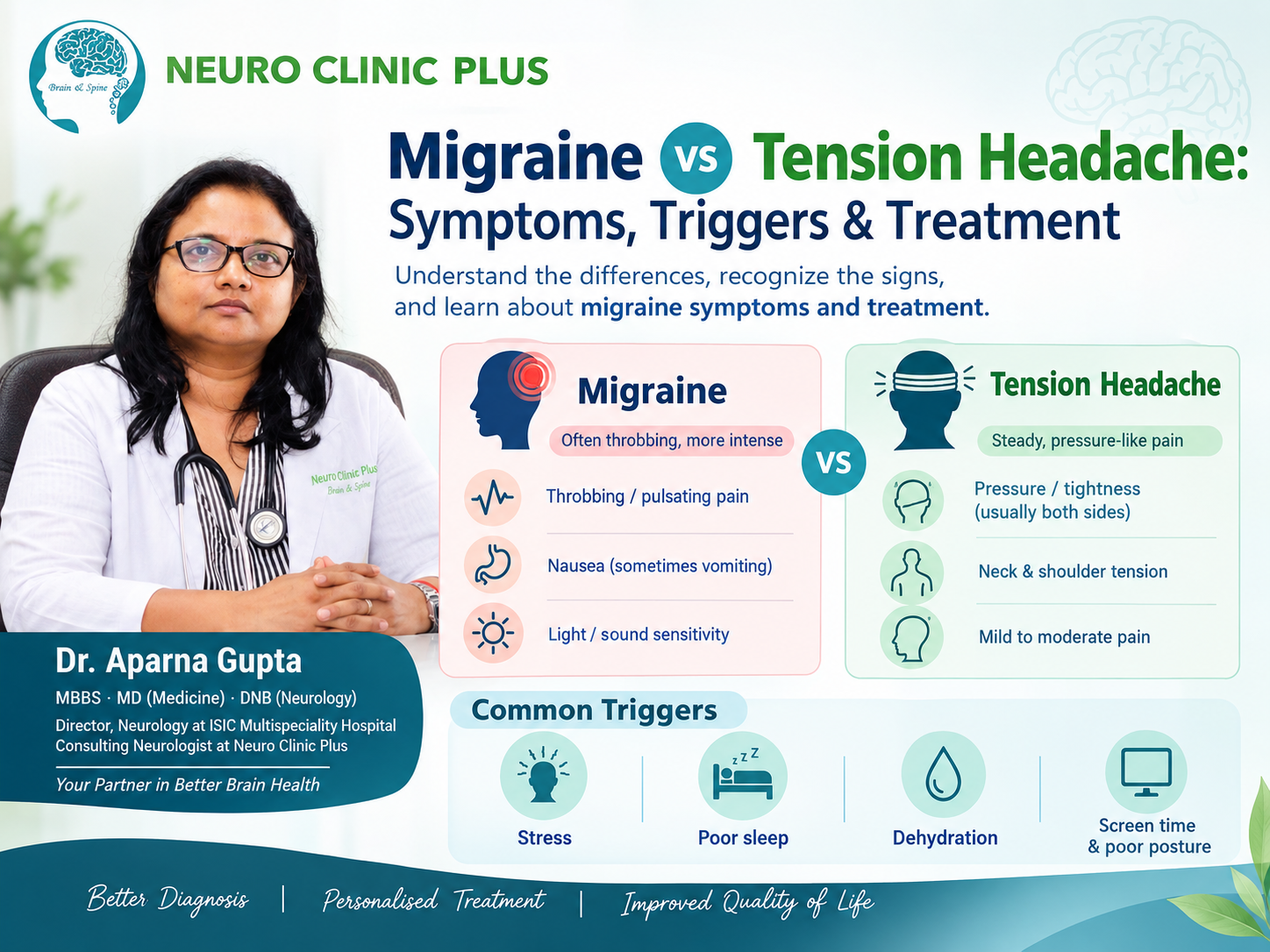
A migraine attack may cause moderate to severe, pulsating or throbbing pain and can be accompanied by nausea, vomiting, dizziness, or sensitivity to light, sound or smells. A tension-type headache more often produces mild to moderate, steady pressure or aching on both sides of the head.
Migraine Symptoms
Common migraine symptoms may include:
- Moderate to severe head pain
- Pulsating or throbbing sensation
- Pain on one or both sides of the head
- Nausea or vomiting
- Sensitivity to light
- Sensitivity to sound
- Sensitivity to smells in some people
- Dizziness or vertigo in some cases
- Visual or sensory aura in some people
- Difficulty concentrating or feeling mentally “foggy”
A migraine attack can last from several hours to several days.
Tension Headache Symptoms
Tension-type headache symptoms are usually different. People commonly describe:
- Dull or aching head pain
- Pressure or tightness around the forehead
- A band-like sensation around the head
- Pain on both sides of the head
- Tenderness around the scalp, neck or shoulders
- Mild to moderate pain
- Little or no effect from normal physical activity
Nausea and vomiting are generally not typical features of tension-type headaches.
Migraine vs Tension Headache: Comparison Table
| Feature | Migraine | Tension-Type Headache |
| Pain quality | Often throbbing or pulsating | Usually dull, aching or pressing |
| Pain intensity | Moderate to severe | Usually mild to moderate |
| Location | One or both sides; may be around the eyes or other areas | Often both sides of the head |
| Nausea | Common | Usually absent |
| Vomiting | May occur | Usually absent |
| Light sensitivity | Common | May occur but less typical |
| Sound sensitivity | Common | Less common |
| Physical activity | May worsen symptoms | Usually does not worsen pain |
| Aura | Can occur in some migraine attacks | Not typical |
| Neck/scalp tenderness | Can occur | Relatively common |
| Duration | Often 4 hours to several days | 30 minutes to several days |
These patterns can help distinguish the two, but symptoms can overlap. A medical professional may need to assess your history and symptoms before determining the headache type.
What Triggers Migraine?
Migraine triggers are highly individual. Something that causes an attack for one person may have no effect on another.
Commonly reported migraine triggers include:
- Stress or changes in stress levels
- Poor or irregular sleep
- Skipping meals
- Dehydration
- Bright lights
- Strong smells
- Weather or environmental changes
- Hormonal changes
- Certain foods or drinks
- Excessive or changing caffeine intake
Keeping a migraine diary can help identify patterns between your daily routine and headache episodes.
It is also important to remember that a trigger is not necessarily the underlying cause of migraine. Migraine is a complex neurological condition influenced by multiple factors.
What Triggers Tension Headaches?
Tension-type headaches are frequently associated with everyday physical and emotional factors.
Potential triggers include:
- Stress
- Poor sleep
- Long periods of sitting
- Poor posture
- Neck and shoulder muscle tension
- Extended screen time
- Fatigue
- Emotional strain
Stress is one of the most frequently reported triggers for tension-type headaches. Improving sleep, exercising regularly and using relaxation strategies may help reduce their frequency for some people.
Migraine vs Tension Headache: How Does the Pain Feel?
Pain quality is one of the useful clues when comparing migraine vs tension headache.
Migraine pain is commonly described as pulsating or throbbing. It can become intense enough to interfere with work, study, exercise or normal daily activities.
Tension headache pain is generally more steady. Patients often describe it as pressure, tightness or a band wrapped around the forehead or head. It usually does not become significantly worse with routine physical activity.
However, not every migraine follows the classic pattern. Some people may experience migraine without severe or one-sided pain, which is one reason self-diagnosis can sometimes be difficult.
How Long Does a Migraine Last?
A migraine attack can last from 4 hours to 72 hours when untreated or inadequately treated. Some people experience warning symptoms before the headache and may also feel tired, mentally foggy or otherwise unwell after the main headache has settled.
The frequency also varies considerably. Some people experience occasional attacks, while others have frequent or chronic migraine requiring preventive treatment.
How Long Does a Tension Headache Last?
Tension-type headaches can last anywhere from about 30 minutes to several days, depending on whether they are episodic or chronic. Chronic tension-type headaches can occur on 15 or more days per month for at least three months.
If headaches are becoming more frequent, lasting longer or changing in character, it is worth discussing the pattern with a doctor rather than repeatedly treating the pain yourself.
Migraine Treatment: What Are the Options?
Migraine treatment generally depends on how often attacks occur, how severe they are and how much they interfere with daily life.
Treatment may involve:
Acute Treatment
These treatments are taken when a migraine attack begins. Depending on the individual situation, doctors may recommend specific pain-relieving or migraine-targeted medicines.
Preventive Treatment
People with frequent or particularly disruptive migraine attacks may benefit from preventive treatment. Preventive medicines are taken regularly with the goal of reducing the frequency or severity of future attacks.
Lifestyle Management
A consistent routine can also be an important part of migraine care:
- Maintain regular sleep
- Avoid skipping meals
- Stay adequately hydrated
- Exercise regularly as tolerated
- Identify individual triggers
- Manage stress
- Maintain a headache diary
Treatment should be individualized because people can respond differently to the same medication or strategy.
Tension Headache Treatment
Treatment for tension-type headache depends on how often the headaches occur and how disruptive they become.
For occasional episodes, doctors may recommend appropriate pain-relieving medicines. For frequent or chronic headaches, preventive treatment and non-medication approaches may also be considered.
Helpful strategies may include:
- Improving sleep habits
- Regular physical activity
- Stress-management techniques
- Addressing posture and prolonged sitting
- Relaxation exercises
- Managing neck and shoulder muscle tension
- Using medication appropriately
Frequent reliance on pain-relieving medicines can itself contribute to medication-overuse headache, so persistent headaches should not simply be treated with repeated doses without medical guidance.
When Should You See a Neurologist for Headaches?
Occasional headaches may not always require specialist evaluation. However, medical assessment becomes particularly important when headaches are:
- Increasing in frequency
- Becoming progressively more severe
- Interfering with work, sleep or everyday activities
- Difficult to control with your usual treatment
- Associated with unusual neurological symptoms
- New or significantly different from previous headaches
- Requiring frequent pain medication
A doctor can review your headache history, associated symptoms, medications and possible triggers to determine whether the pattern is consistent with migraine, tension-type headache or another condition.
Seek Urgent Medical Attention for Certain Warning Signs
A sudden, extremely severe headache or a headache accompanied by symptoms such as new weakness, difficulty speaking, confusion, fainting, seizure, significant vision changes, fever with neck stiffness, or symptoms following a serious head injury requires urgent medical assessment.
These symptoms can sometimes indicate a secondary headache rather than a typical primary headache disorder.
How Is Migraine vs Tension Headache Diagnosed?
There is usually no single blood test or scan that confirms migraine. Diagnosis is primarily based on the patient’s symptoms, medical history and neurological examination.
During an evaluation, a doctor may ask about:
- Where the pain occurs
- How the pain feels
- How severe it becomes
- How long it lasts
- How frequently it happens
- Associated symptoms such as nausea or light sensitivity
- Possible triggers
- Current medications
- Family history of migraine
- Any changes in the headache pattern
A headache diary can be particularly useful because it allows you to record the timing, severity, symptoms and possible triggers over several weeks.
About Dr. Aparna Gupta and Neuro Clinic Plus
Dr. Aparna Gupta is a neurologist with 22+ years of clinical experience, holding MBBS, MD (Medicine) and DNB (Neurology) qualifications. She serves as Director, Neurology at ISIC Multispeciality Hospital and also consults at Neuro Clinic Plus in Safdarjung Enclave, New Delhi.
Her clinical practice includes neurological conditions such as migraine and chronic headache, epilepsy, stroke, vertigo, Parkinson’s disease, dementia, peripheral neuropathy, multiple sclerosis, brain infections, autoimmune neurological disorders and neck and lower back pain.
Her approach emphasizes careful clinical assessment, clear communication and individualized treatment planning. For people trying to understand whether recurring headaches may represent migraine, tension-type headache or another headache disorder, a detailed symptom history can be an important starting point.
Frequently Asked Questions
1. Is migraine more severe than a tension headache?
Migraine is often associated with moderate to severe pain and additional symptoms such as nausea and sensitivity to light or sound. Tension-type headache is generally mild to moderate and more commonly causes pressure or aching. However, headache severity varies between individuals.
2. Can a tension headache turn into a migraine?
Tension-type headache and migraine are separate headache disorders, but symptoms can overlap. Some people with migraine may also experience tension-type headaches, making the distinction difficult without reviewing the overall pattern.
3. Is migraine always on one side of the head?
No. Migraine can affect one side or both sides of the head. The location of pain alone cannot reliably distinguish migraine from other headaches.
4. Can stress cause migraine?
Stress is a commonly reported migraine trigger. However, migraine has multiple contributing factors, and stress is better understood as a potential trigger rather than the sole cause of the condition.
5. Can stress cause tension headaches?
Yes. Stress is one of the most commonly reported triggers associated with tension-type headaches. Poor sleep, posture and muscle tension may also contribute.
6. Can migraine cause nausea?
Yes. Nausea and sometimes vomiting are common symptoms associated with migraine attacks.
7. Can a tension headache cause nausea?
Nausea and vomiting are not typical features of tension-type headache. If significant nausea or vomiting accompanies recurring headaches, migraine or another headache disorder may need to be considered.
8. Does exercise make migraine worse?
Physical activity can worsen migraine pain during an attack. In contrast, routine physical activity generally does not make tension-type headache pain worse.
9. How can I identify my headache triggers?
Keep a headache diary and record sleep, meals, hydration, stress, menstrual or hormonal patterns where relevant, caffeine, environmental exposures, symptoms and the timing of each headache. This can help reveal personal patterns.
10. Can taking painkillers too often cause headaches?
Yes. Frequent use of acute headache medicines can contribute to medication-overuse headache. If you regularly need pain medication for headaches, discuss the pattern with a healthcare professional rather than repeatedly increasing self-treatment.
11. When should I see a neurologist for recurring headaches?
Consider medical evaluation if headaches are frequent, worsening, interfering with daily life, difficult to control, changing from your usual pattern or associated with unusual neurological symptoms.
12. Can migraine and tension headaches be treated?
Yes. Both can be managed, but the treatment approach depends on the specific diagnosis, frequency, severity and individual circumstances. Migraine management may include acute and preventive treatments, while tension-type headache management can include appropriate medicines, lifestyle measures and preventive strategies when needed.
Conclusion
Understanding migraine vs tension headache starts with looking beyond the pain itself. Throbbing or pulsating pain accompanied by nausea and sensitivity to light or sound is more suggestive of migraine, while steady pressure or tightness affecting both sides of the head is more typical of a tension-type headache.
Still, headache symptoms do not always follow textbook patterns. Keeping track of your symptoms, frequency, triggers and medication use can provide valuable information for a proper diagnosis.
If headaches are becoming frequent, changing in character or interfering with everyday life, professional neurological evaluation can help identify the underlying headache disorder and guide an appropriate treatment plan.