
Best Brain Infection Treatment in South Delhi begins with recognising the symptoms early and getting an accurate neurological evaluation. Brain infections are serious medical conditions that can affect the brain, spinal cord, or the protective tissues surrounding the brain. Depending on the cause, they may develop gradually or progress rapidly and can lead to complications involving memory, movement, speech, consciousness, or seizures.
Brain infections may be caused by viruses, bacteria, fungi, parasites, or, in some cases, immune-related inflammation following an infection. Conditions such as encephalitis and meningitis require careful assessment because their symptoms can overlap with other neurological problems. Fever, severe headache, vomiting, confusion, seizures, drowsiness, stiff neck, behavioural changes, or difficulty speaking should never be ignored.
At Neuro Clinic Plus, Dr. Aparna Gupta provides personalised, evidence-based neurological care for complex conditions, including brain infections. With more than 22 years of clinical experience, she focuses on accurate diagnosis, appropriate treatment and compassionate patient care.
What Is a Brain Infection?
A brain infection occurs when an infectious organism affects the central nervous system or the tissues surrounding the brain and spinal cord. Because the brain controls essential functions such as movement, speech, memory, coordination and consciousness, infections affecting it can become serious quickly.
Two commonly discussed conditions are encephalitis and meningitis.
Encephalitis refers to inflammation of the brain itself. It can be caused by infections, particularly certain viruses, although immune-system-related inflammation can also produce an encephalitis-like condition. Symptoms may initially resemble flu, but neurological symptoms such as confusion, seizures, behavioural changes, speech difficulties or weakness can develop.
Meningitis involves inflammation of the protective lining around the brain and spinal cord. It can have several causes, including bacterial, viral, fungal and other infections. Bacterial meningitis is particularly serious and requires urgent medical treatment.
The important point is that not every headache or fever indicates a brain infection. However, when neurological symptoms occur alongside fever or other warning signs, timely medical assessment is important.
What Causes Brain Infections?
Brain infections can have different causes, and identifying the underlying cause is an important part of treatment.
Viral Infections
Viruses are among the causes associated with encephalitis and viral meningitis. Certain herpes viruses, varicella-zoster virus and mosquito-borne viruses can affect the nervous system. Japanese encephalitis, for example, is a mosquito-borne viral infection that can cause neurological disease in a small proportion of infected individuals.
The treatment depends on the specific virus and the severity of the illness. Some viral infections may require antiviral medication, while others are primarily managed with supportive care.
Bacterial Infections
Bacteria can cause meningitis and other serious central nervous system infections. Bacterial meningitis is considered a medical emergency because the illness can progress rapidly and may result in complications or death if treatment is delayed.
Treatment generally requires hospital-based care and appropriate antibiotics selected according to the suspected or confirmed infection.
Fungal Infections
Fungal infections of the nervous system are less common but can occur, particularly in people with certain risk factors or weakened immune systems. Because fungal infections may require specialised treatment, identifying the cause is important before deciding on the treatment approach.
Parasitic and Other Infections
Certain parasites and rare organisms can also affect the central nervous system. Some infections are associated with specific environmental or travel exposures. Because these conditions can resemble other neurological disorders, detailed medical history and appropriate diagnostic testing can be important.
Common Symptoms of Brain Infection
The symptoms of a brain infection can vary depending on the part of the nervous system affected, the organism responsible and the severity of inflammation.
Some common symptoms include:
- Persistent or severe headache
- Fever
- Nausea or vomiting
- Neck stiffness
- Confusion or disorientation
- Excessive drowsiness
- Seizures
- Sensitivity to light
- Difficulty speaking
- Changes in behaviour or personality
- Weakness or loss of movement
- Problems with coordination
- Changes in consciousness
- Memory or concentration difficulties
Encephalitis may initially produce fever, headache, nausea and muscle or joint aches. More serious neurological symptoms can develop later, including confusion, seizures, behavioural changes, speech difficulties, weakness and loss of consciousness.
Meningitis commonly presents with fever, headache and a stiff neck. Nausea, vomiting, sensitivity to light and altered mental status can also occur.
Why Early Symptoms Should Not Be Ignored
A major challenge with brain infections is that early symptoms may resemble common illnesses. A person may initially think that a headache, fever or tiredness is related to a viral illness.
However, the appearance of neurological symptoms changes the situation.
For example, fever combined with confusion, seizures, difficulty speaking, unusual behaviour or loss of consciousness requires urgent medical assessment. Early recognition can help healthcare professionals identify the possible cause and start appropriate treatment without unnecessary delay.
When Should You See a Neurologist?
You should seek medical attention when symptoms suggest that the nervous system may be involved.
A neurological consultation becomes particularly important when a person experiences:
1. Severe or Unusual Headache
A sudden, severe or persistent headache, especially when accompanied by fever, vomiting, confusion or neck stiffness, should be medically evaluated.
2. Confusion or Changes in Behaviour
Unexpected confusion, disorientation, unusual behaviour, personality changes or difficulty communicating can indicate that the brain is being affected.
3. Seizures
A new seizure in a person without a previous history of epilepsy requires medical evaluation. Seizures can occur in serious neurological conditions, including encephalitis and other brain infections.
4. Weakness or Difficulty Speaking
New weakness, difficulty speaking, movement problems or coordination difficulties should never be ignored. These symptoms can have several possible causes, including stroke and infection, so urgent assessment is necessary.
5. Loss of Consciousness
Reduced consciousness, extreme drowsiness or unconsciousness is an emergency and requires immediate medical attention.
6. Fever With Neurological Symptoms
Fever by itself is common. But fever accompanied by severe headache, stiff neck, confusion, seizures or altered consciousness requires prompt evaluation.
The NHS notes that serious encephalitis symptoms require emergency hospital assessment because the condition can become life-threatening.
How Is a Brain Infection Diagnosed?
Accurate diagnosis is one of the most important steps in managing a suspected brain infection. Symptoms alone are not always sufficient to identify the exact cause.
A neurologist may consider the patient’s:
- Symptoms and their duration
- Medical and medication history
- Recent infections
- Travel or environmental exposure
- Immune-system status
- Neurological examination
- Blood test results
- Brain imaging
- Cerebrospinal fluid analysis
- EEG findings
- Other specialised investigations when required
MRI and CT Scans
Brain imaging can help doctors identify abnormalities and distinguish infection-related changes from other neurological conditions.
MRI provides detailed images of the brain and can be particularly useful when evaluating neurological symptoms. CT scans may also be used depending on the patient’s clinical condition and the diagnostic question.
The NHS notes that CT and MRI scans can help investigate suspected encephalitis and rule out other problems such as stroke, brain tumours or aneurysms.
Lumbar Puncture
In selected cases, doctors may recommend a lumbar puncture to analyse cerebrospinal fluid, commonly called CSF.
The sample can be examined for evidence of infection or immune-system-related abnormalities. CSF testing can be an important part of evaluating meningitis and encephalitis when clinically appropriate.
EEG
An electroencephalogram, or EEG, records electrical activity in the brain. It may be useful when seizures, altered consciousness or abnormal brain activity are suspected.
At Neuro Clinic Plus, EEG is listed among the diagnostic facilities available as part of its neurological care services.
What Does Brain Infection Treatment Involve?
Treatment depends entirely on the underlying cause, severity and individual medical circumstances.
There is no single treatment that works for every brain infection. A patient with bacterial meningitis, viral encephalitis and an immune-mediated neurological condition may require completely different treatment approaches.
Antiviral Treatment
Some viral infections affecting the brain can be treated with antiviral medication. For example, herpes simplex encephalitis is generally treated with intravenous antiviral medication when clinically suspected.
Antibiotics
When a bacterial infection is suspected or confirmed, appropriate antibiotics are required. Bacterial meningitis requires urgent treatment, and delaying appropriate therapy can increase the risk of serious complications.
Antifungal Treatment
Fungal infections may require antifungal medication. The choice of medication depends on the organism, the location of infection and the patient’s overall health.
Managing Seizures
Brain infections can sometimes trigger seizures. Doctors may prescribe anti-seizure medication when clinically necessary and monitor the patient closely.
Managing Brain Swelling and Other Complications
Severe encephalitis can affect breathing, consciousness and pressure inside the skull. Hospital-based treatment may therefore include fluids, oxygen, seizure control, monitoring and measures to manage complications.
In severe cases, intensive care may be required.
Why Accurate Diagnosis Matters
One of the most important aspects of Brain Infection Treatment in South Delhi is determining what is actually causing the symptoms.
A common mistake is to assume that every brain infection is treated with antibiotics. This is not correct. Treatment depends on the organism or underlying mechanism.
For example, bacterial meningitis requires antibiotics, while many cases of viral meningitis are managed differently. Certain forms of encephalitis may require antiviral treatment, while immune-mediated inflammation may require treatment aimed at controlling the immune response.
Therefore, self-medication with antibiotics or other medicines is not recommended.
A neurologist evaluates the complete clinical picture and determines which investigations and treatment strategies are appropriate.
Why Choose Neuro Clinic Plus for Neurological Care?
Neuro Clinic Plus is a neurological care centre in Safdarjung Enclave, South Delhi, led by Dr. Aparna Gupta, M.B.B.S., MD, DNB (Neurology).
According to the clinic’s website, Dr. Gupta is an Associate Director of Neurology at ISIC Multispeciality Hospital and has more than 22 years of clinical experience. The clinic provides personalised, evidence-based neurological care across a broad range of conditions.
Brain infection is specifically included among the clinic’s areas of neurological expertise.
Experienced Neurological Care
Experience can be valuable when dealing with complex neurological symptoms because several neurological disorders can present with similar complaints.
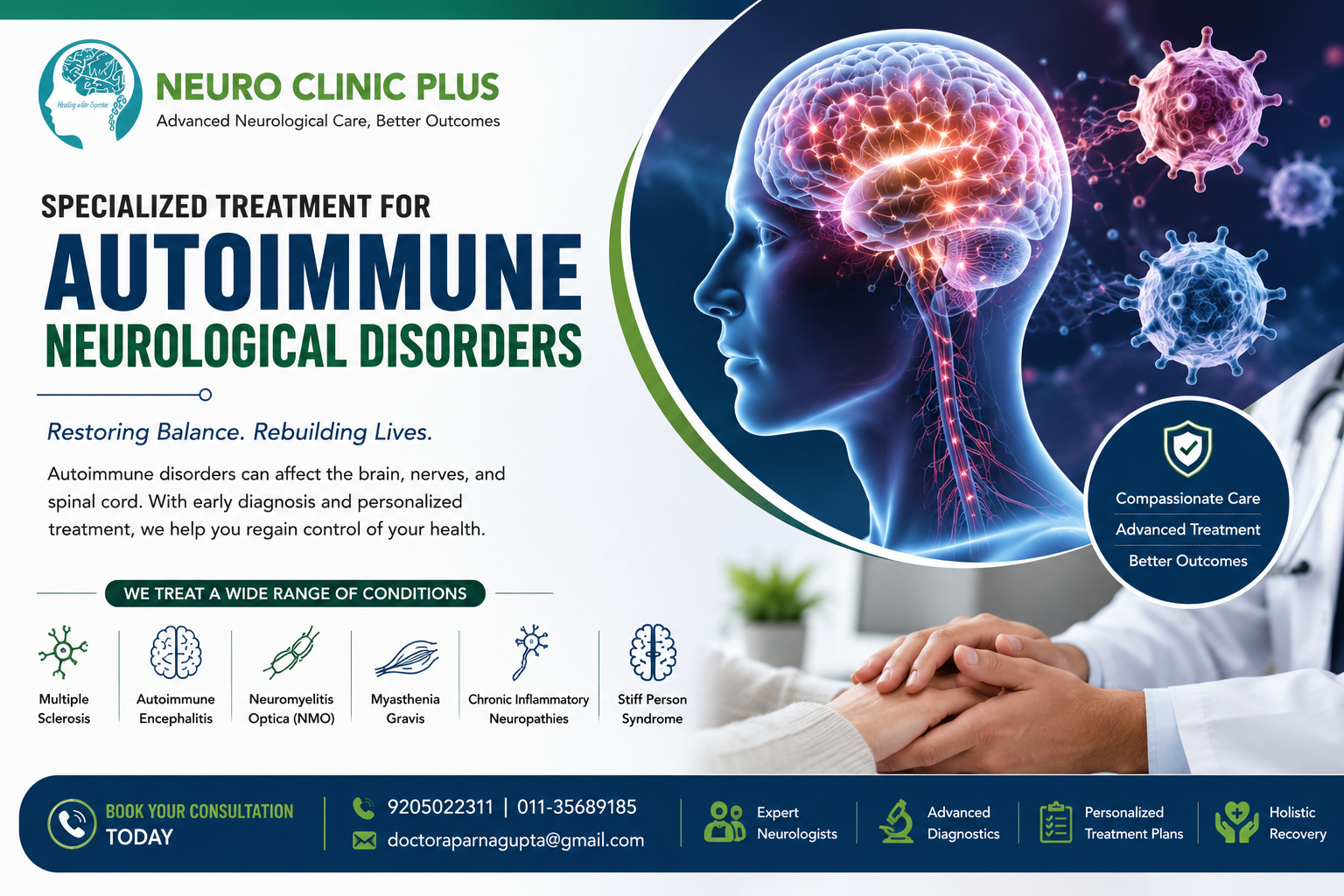
Dr. Aparna Gupta’s clinical background includes the evaluation and management of a wide range of neurological conditions, including stroke, epilepsy, headache and migraine, vertigo, Parkinson’s disorder, dementia, multiple sclerosis, autoimmune disorders, neuropathy and brain infections.
Personalised Approach
Neuro Clinic Plus describes its approach as patient-centric, with an emphasis on accurate diagnosis, modern treatment methods and compassionate care.
This is particularly relevant for neurological conditions because treatment plans may need to be adjusted according to symptoms, diagnostic findings, medical history and individual response.
Diagnostic Support
The clinic website lists several diagnostic facilities, including MRI/CT imaging, EEG, NCV/EMG/RNST, BAER/VEP/SSEP, sleep study, ABPM and 24-hour Holter monitoring.
Having access to appropriate diagnostic evaluation can support a more structured approach to neurological care.
Comprehensive Neurological Services
Neuro Clinic Plus does not focus on only one neurological condition. Its listed specialisations cover multiple areas of neurology, allowing patients with complex or overlapping neurological symptoms to receive specialist evaluation.
Add Your Heading Text Here
A neurological consultation generally begins with a detailed discussion of the patient’s symptoms.
The neurologist may ask:
- When did the symptoms begin?
- Did they appear suddenly or gradually?
- Has there been fever or recent infection?
- Is there a severe headache?
- Has the patient experienced vomiting?
- Has there been confusion or unusual behaviour?
- Has a seizure occurred?
- Has there been weakness or difficulty speaking?
- Are there any previous neurological conditions?
- Are there recent travel or environmental exposures?
The doctor may then conduct a neurological examination to assess functions such as strength, coordination, reflexes, sensation, speech and mental status.
Based on the findings, further tests may be recommended.
This step-by-step approach helps avoid assumptions and allows treatment decisions to be based on clinical evidence.
Can Brain Infections Cause Long-Term Problems?
Recovery varies significantly from person to person.
Some patients may recover completely, while others may experience persistent neurological problems depending on the severity and type of infection, how quickly treatment was started and whether complications occurred.
Possible long-term effects after serious encephalitis can include memory problems, recurrent seizures, changes in behaviour, concentration difficulties and persistent fatigue.
Bacterial meningitis can also result in long-term complications, including hearing or vision problems, seizures, movement difficulties and problems with memory or concentration.
This is why treatment should not end simply because the infection has been controlled. Some patients may require follow-up neurological care and rehabilitation.
Recovery and Follow-Up Care
Recovery from a neurological infection may take time.
Depending on the patient’s condition, follow-up care may include:
- Neurological monitoring
- Medication adjustment
- Seizure management
- Cognitive assessment
- Physiotherapy
- Speech or occupational therapy when needed
- Monitoring of memory and concentration
- Lifestyle guidance
- Regular clinical follow-ups
The goal is not only to manage the infection but also to support the patient’s overall neurological recovery.
At Neuro Clinic Plus, the clinic’s broader neurological care model includes access to Neuroheal Physiotherapy Center along with other diagnostic facilities listed on the website.
How Can Brain Infections Be Prevented?
Not every brain infection can be prevented, but certain measures can reduce risk.
Stay Updated With Recommended Vaccinations
Some infections associated with meningitis or encephalitis can be prevented through vaccination. Vaccination recommendations depend on age, health status, travel plans and individual risk factors.
Prevent Mosquito and Insect Bites
Certain viruses that can affect the brain are transmitted by mosquitoes or other vectors. Using appropriate insect protection can reduce exposure.
Maintain Good Hygiene
Regular handwashing, safe food practices and avoiding close contact with people who have contagious infections can help reduce the spread of certain infectious diseases.
Seek Medical Care Early
One of the most important steps is not delaying medical attention when serious symptoms develop.
When Is a Brain Infection an Emergency?
Some symptoms require immediate emergency medical attention rather than waiting for a routine appointment.
Seek emergency care if someone develops:
- Sudden confusion
- Loss of consciousness
- New seizures
- Severe headache with fever
- Severe neck stiffness
- Difficulty speaking
- New weakness or paralysis
- Significant changes in behaviour
- Extreme drowsiness or inability to wake normally
- Rapid deterioration of neurological symptoms
Bacterial meningitis can progress quickly, and serious encephalitis requires urgent hospital treatment.
If severe symptoms are present, patients should seek emergency medical care immediately rather than waiting for a clinic appointment.
Frequently Asked Questions
What is the most common symptom of a brain infection?
Symptoms vary depending on the type of infection. Fever, headache, vomiting, confusion, neck stiffness, seizures and changes in consciousness are among the symptoms that may occur. A combination of fever and neurological symptoms should be evaluated promptly.
Is every brain infection caused by a virus?
No. Brain and central nervous system infections can be caused by viruses, bacteria, fungi, parasites and other organisms. Some conditions that resemble infection can also involve abnormal immune-system activity.
Is meningitis the same as encephalitis?
No. Meningitis refers to inflammation of the protective lining around the brain and spinal cord, while encephalitis refers to inflammation of the brain itself. Some patients can have overlapping conditions.
Can a brain infection be completely cured?
Some brain infections can be successfully treated and patients may recover fully, while others can cause long-term neurological complications. Outcome depends on the cause, severity, treatment timing and individual health factors.
What tests are used to diagnose brain infections?
Depending on symptoms, doctors may recommend blood tests, brain imaging such as MRI or CT, cerebrospinal fluid analysis through lumbar puncture, EEG and other investigations. The exact tests depend on the suspected condition.
Can brain infections cause seizures?
Yes. Seizures can occur in conditions such as encephalitis and other serious neurological infections. New-onset seizures require urgent medical assessment.
Is fever alone a sign of a brain infection?
No. Fever has many possible causes. However, fever accompanied by severe headache, stiff neck, confusion, seizures or other neurological symptoms should be assessed urgently.
Can brain infections cause memory problems?
Yes. Some severe infections affecting the brain can lead to persistent problems with memory, concentration, behaviour or other cognitive functions.
When should I consult a neurologist?
You should consider neurological evaluation when symptoms involve the nervous system, especially unexplained seizures, confusion, persistent severe headaches, weakness, speech difficulties, changes in consciousness or other unusual neurological symptoms.
Where can I seek Brain Infection Treatment in South Delhi?
Patients looking for specialist neurological evaluation can consult Neuro Clinic Plus in Safdarjung Enclave, New Delhi, where Dr. Aparna Gupta provides neurological care and lists brain infection among her areas of specialisation. The clinic website also lists diagnostic facilities including MRI/CT imaging and EEG.
Conclusion
Best Brain Infection Treatment in South Delhi is not simply about choosing a treatment or medicine; it begins with recognising warning signs, obtaining an accurate diagnosis and identifying the underlying cause. Brain infections can range from relatively manageable illnesses to serious neurological emergencies, so symptoms such as fever with severe headache, confusion, seizures, neck stiffness, behavioural changes or loss of consciousness should never be ignored.
Early neurological assessment can help determine whether the symptoms are related to meningitis, encephalitis, another infection or a different neurological condition. Diagnosis may involve clinical examination, blood tests, MRI or CT imaging, cerebrospinal fluid analysis and EEG depending on the individual case.
For patients seeking Brain Infection Treatment in South Delhi, Neuro Clinic Plus offers specialist neurological care under Dr. Aparna Gupta, M.B.B.S., MD, DNB (Neurology), who has more than 22 years of clinical experience and serves as Associate Director of Neurology at ISIC Multispeciality Hospital. The clinic’s approach focuses on personalised, evidence-based and compassionate neurological care.
Located in Safdarjung Enclave, New Delhi, Neuro Clinic Plus provides care across a wide range of neurological conditions, including brain infections, epilepsy, stroke, migraine, vertigo, Parkinson’s disorder, dementia, multiple sclerosis, autoimmune neurological disorders and neuropathy.
If you or a family member develops sudden or severe neurological symptoms, seek appropriate medical attention without delay. Timely evaluation is an important step toward safer diagnosis, treatment and recovery.