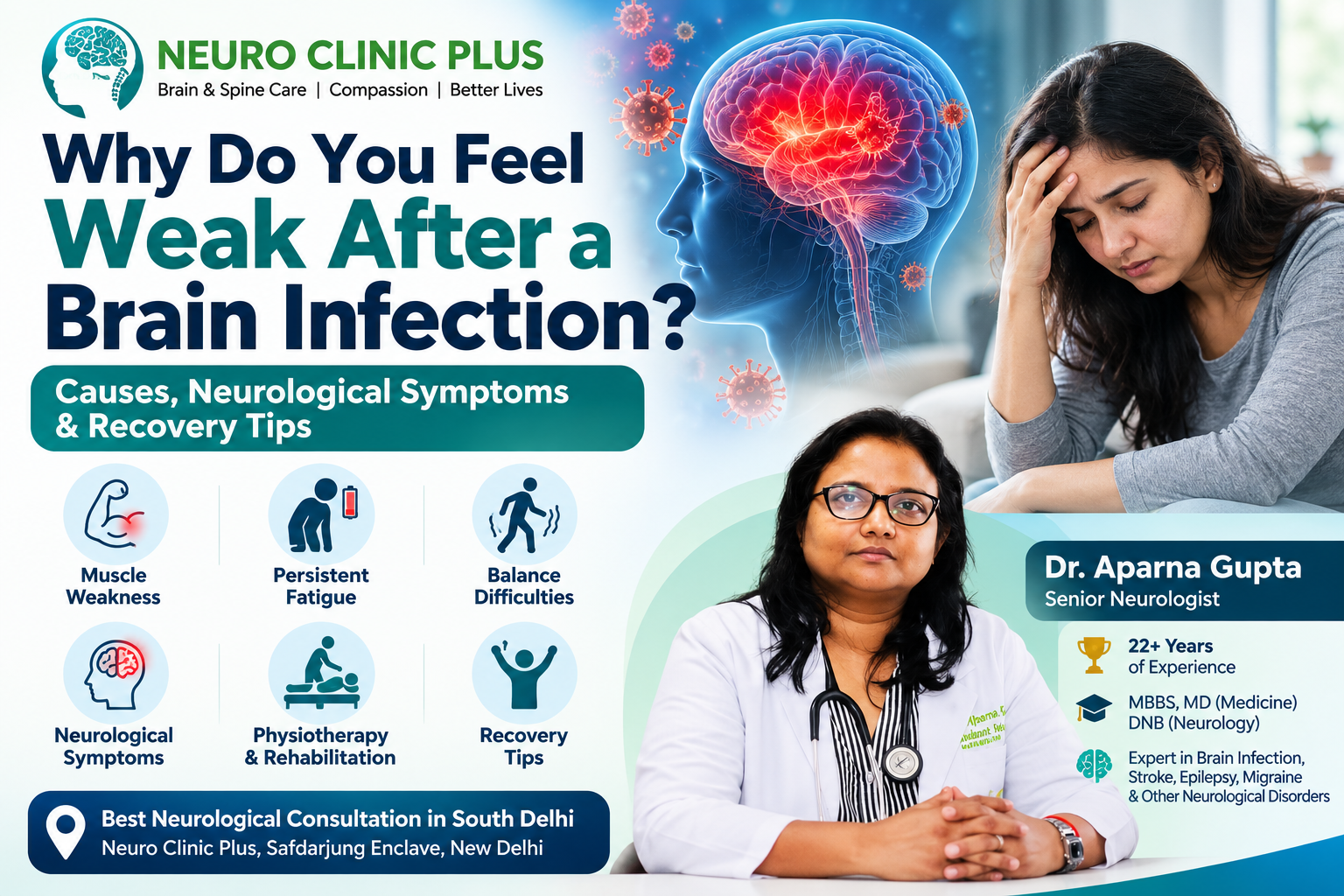
Recovering from a brain infection is not always as simple as leaving the hospital and returning to your normal routine. Some patients continue to feel exhausted, struggle to walk comfortably, or notice that everyday activities require much more effort than before.
Weakness after brain infection can develop for several reasons, including inflammation affecting the nervous system, muscle loss during hospitalization, and persistent neurological fatigue. Conditions such as encephalitis and severe meningitis can sometimes affect movement, coordination, and physical endurance even after the initial illness has been treated.
For patients and families, understanding these symptoms is important. While some difficulties improve gradually, others require neurological assessment, physiotherapy, and a personalized recovery plan.
Is Weakness Normal After a Brain Infection?
Feeling physically weak or unusually tired during recovery from a serious infection is not uncommon.
However, the word weakness can describe different problems.
Some patients feel generally exhausted despite having normal muscle strength. Others experience actual difficulty moving an arm or leg, standing from a chair, or maintaining balance.
These symptoms are not always caused by the same problem.
For example, a person recovering from encephalitis might become tired after walking a short distance. Another patient may have difficulty lifting one foot because neurological pathways involved in movement were affected.
Persistent weakness should not automatically be considered a normal part of recovery. A medical assessment can help identify the underlying cause and determine whether additional treatment is needed.
Why Does Weakness Occur After a Brain Infection?
Several factors may contribute to weakness and reduced stamina.
1. Inflammation Affecting Brain Function
Encephalitis involves inflammation of brain tissue.
When areas responsible for movement or coordination are affected, patients may experience muscle weakness, difficulty controlling movements, or problems with balance.
The severity depends on which neurological pathways are involved.
2. Muscle Loss During Hospitalization
Patients with severe infections sometimes spend days or weeks in hospital.
Prolonged inactivity, bed rest, and critical illness can contribute to muscle weakness and reduced physical fitness.
Even when the infection improves, rebuilding strength may take time.
3. Neurological Fatigue
Fatigue after encephalitis can be different from ordinary tiredness.
Some patients feel mentally and physically exhausted after activities that previously required little effort.
This may happen because the recovering brain needs greater effort to perform familiar tasks.
4. Sleep Disturbances
Changes in sleep patterns can interfere with recovery.
Poor sleep may worsen tiredness, concentration difficulties, and a person’s ability to participate in rehabilitation.
5. Associated Neurological Complications
Certain patients experience seizures, coordination difficulties, or other neurological problems after a serious brain infection.
These complications may affect mobility and everyday independence.
6. Other Treatable Medical Causes
Not every episode of weakness is a direct consequence of brain injury.
Anemia, nutritional deficiencies, dehydration, medication effects, electrolyte disturbances, and other medical conditions can also contribute.
Identifying these problems is important because some may be treatable.
Common Symptoms of Weakness After Brain Infection
The symptoms vary according to the type and severity of the illness.
Common difficulties include:
- Muscle weakness: Reduced ability to lift, grip, stand, or walk.
- Persistent tiredness: Feeling exhausted after relatively small activities.
- Poor balance: Feeling unsteady while standing or walking.
- Reduced stamina: Becoming tired sooner than expected.
- Movement difficulties: Trouble coordinating familiar physical tasks.
- Slower daily activities: Needing additional time for dressing, bathing, or household work.
- Concentration problems: Feeling mentally exhausted during conversations or reading.
Some patients experience several of these symptoms together.
Keeping track of when symptoms appear and how they affect daily activities can be useful during neurological consultations.
Can Encephalitis Cause Long-Term Muscle Weakness?
Yes. Some patients experience persistent physical difficulties after encephalitis.
Muscle weakness after encephalitis may be associated with neurological injury, reduced activity during hospitalization, or other complications.
Recovery varies considerably.
Some individuals gradually regain their previous strength and independence. Others require extended rehabilitation or long-term support.
The outcome depends on factors such as:
- Severity of the original illness.
- Areas of the brain affected.
- Duration of hospitalization.
- Presence of neurological complications.
- Overall physical health.
- Access to appropriate rehabilitation.
Recovery is not always predictable, and patients may experience better days and more difficult days.
Can Meningitis Also Cause Weakness?
Severe meningitis can sometimes lead to neurological complications.
While meningitis primarily affects the membranes surrounding the brain and spinal cord, complications may involve brain function, circulation, or other parts of the nervous system.
Some patients recovering from severe bacterial meningitis experience fatigue or neurological difficulties.
Neurological weakness after meningitis requires evaluation rather than assuming it will resolve without treatment.
Early recognition of persistent symptoms allows doctors to determine whether rehabilitation or further investigations are appropriate.
How Is Weakness After Brain Infection Diagnosed?
A neurologist begins by understanding the patient’s original infection, hospital treatment, and current difficulties.
Medical History and Neurological Examination
The examination may assess:
- Muscle strength and reflexes.
- Walking and balance.
- Coordination.
- Sensation.
- Muscle tone.
- Cognitive and functional difficulties.
Brain Imaging
An MRI or other imaging test may be recommended when doctors suspect structural neurological complications.
Not every patient needs repeat imaging.
Blood Investigations
Blood tests may help identify anemia, electrolyte abnormalities, nutritional deficiencies, or other contributing conditions.
Functional Assessment
A physiotherapist or rehabilitation specialist may evaluate walking ability, endurance, and everyday movement.
These assessments help guide an individualized recovery plan.
How Long Does Weakness Last After a Brain Infection?
There is no single recovery timeline that applies to everyone.
Some people notice gradual improvement over several weeks. Others experience physical or neurological difficulties for months or longer.
The recovery period depends on the cause of weakness and the overall effects of the infection.
For example, reduced strength caused largely by inactivity may improve with carefully planned rehabilitation.
Weakness associated with more significant neurological injury may require longer-term treatment and support.
Patients should avoid comparing their progress with someone else’s recovery.
The most useful goal is steady, safe improvement based on individual abilities.
Treatment and Rehabilitation for Weakness After Brain Infection
Treatment should address the underlying cause rather than simply focusing on increasing physical activity.
Physiotherapy
Physiotherapy may help improve muscle strength, coordination, mobility, and balance.
A therapist can recommend suitable exercises and adjust their difficulty as the patient improves.
Occupational Therapy
Occupational therapy helps patients manage daily activities more independently.
This may include strategies for bathing, dressing, meal preparation, and conserving energy.
Managing Neurological Fatigue
Patients may benefit from planned rest periods, consistent sleep schedules, and learning to balance activity with recovery.
Trying to push through severe fatigue may worsen symptoms.
Nutritional and Medical Support
Adequate nutrition and hydration support general recovery.
Doctors may also address treatable problems such as anemia or medication-related side effects.
Neurological Follow-Up
Some patients require continued assessment for seizures, movement difficulties, memory changes, or other long-term neurological effects.
Rehabilitation should be tailored to individual symptoms and clinical needs.
8 Practical Recovery Tips for Patients and Caregivers
Recovering from weakness after brain infection requires patience and realistic expectations.
These strategies may help support daily life:
- Start with manageable activities: Avoid suddenly returning to demanding routines.
- Follow a supervised exercise plan: Perform activities recommended by your rehabilitation team.
- Take regular rest breaks: Rest before fatigue becomes overwhelming.
- Maintain consistent sleep habits: A regular routine may support energy levels.
- Eat balanced meals: Include adequate protein and other essential nutrients.
- Reduce fall risks: Keep walking areas clear and use prescribed mobility aids.
- Track your symptoms: Note changes in strength, fatigue, and daily functioning.
- Attend follow-up appointments: Discuss persistent or worsening difficulties with your doctor.
Family members should encourage independence while providing assistance when necessary.
Small improvements, such as walking a little farther or completing a familiar task more comfortably, can represent meaningful progress.
When Is Weakness After a Brain Infection an Emergency?
Not all weakness during recovery is dangerous, but certain symptoms require urgent medical attention.
Seek immediate emergency hospital care if you notice:
- Sudden weakness affecting one side of the body.
- Facial drooping or sudden speech difficulties.
- New seizures or loss of consciousness.
- Severe headache with fever or neck stiffness.
- Rapidly worsening confusion.
- Sudden inability to walk or maintain balance.
These symptoms may indicate a stroke, active neurological infection, or another serious condition.
Do not wait for a routine clinic appointment when symptoms appear suddenly or worsen rapidly.
About Dr. Aparna Gupta – Neuro Clinic Plus
Dr. Aparna Gupta is an experienced neurologist with 22+ years of experience, associated with Neuro Clinic Plus in Safdarjung Enclave, South Delhi.
She holds MBBS, MD (Medicine), and DNB (Neurology) qualifications.
Her clinical areas include brain infections, epilepsy, stroke-related neurological concerns, migraine, Parkinson’s disease, dementia, neuropathy, and other conditions affecting the nervous system.
Patients experiencing persistent weakness, fatigue, balance problems, or other neurological difficulties after recovering from a brain infection can seek planned neurological consultation to discuss suitable evaluation and follow-up care.
At Neuro Clinic Plus, Dr. Aparna Gupta provides neurological consultation for patients with brain and nervous system concerns.
Frequently Asked Questions (FAQs)
1. Is weakness common after a brain infection?
Some patients experience weakness or persistent fatigue after serious brain infections, particularly when neurological complications or prolonged hospitalization are involved.
2. Why do I feel tired even after recovering from encephalitis?
Neurological fatigue, sleep difficulties, reduced physical fitness, and other medical factors may contribute to ongoing tiredness.
3. Can a brain infection cause muscle weakness?
Yes. Certain brain infections can affect neurological pathways responsible for movement, resulting in muscle weakness or reduced coordination.
4. Can meningitis cause long-term weakness?
Severe meningitis can sometimes lead to neurological complications, including physical difficulties requiring further assessment.
5. How long does weakness after encephalitis last?
Recovery varies. Some patients improve within weeks or months, while others experience persistent difficulties requiring longer-term support.
6. Can physiotherapy help after a brain infection?
Yes. Physiotherapy may improve strength, mobility, balance, and everyday physical functioning when included in an appropriate rehabilitation plan.
7. Is fatigue after encephalitis the same as muscle weakness?
No. Fatigue describes reduced energy or exhaustion, while muscle weakness refers to reduced physical strength. They can occur together.
8. Can brain infection recovery take several months?
Yes. Neurological recovery can extend over months or longer, depending on the illness and complications.
9. Should I exercise if I feel weak after a brain infection?
Gentle, appropriate activity may be helpful, but exercise should follow medical and rehabilitation guidance, particularly when neurological symptoms persist.
10. Can neurological weakness improve completely?
Some patients regain their previous abilities, while others experience lasting difficulties. Outcomes depend on the underlying cause and severity.
11. When should I consult a neurologist for persistent weakness?
Consult a neurologist if weakness continues, worsens, affects daily activities, or occurs alongside balance, memory, or other neurological problems. Sudden weakness requires emergency care.
12. Where can I seek neurological consultation for weakness after brain infection in South Delhi?
Patients with persistent neurological symptoms after a brain infection can enquire about consultation with Dr. Aparna Gupta at Neuro Clinic Plus, Safdarjung Enclave, South Delhi.
Conclusion
Weakness after brain infection can affect patients in several ways, from persistent fatigue and reduced stamina to muscle weakness, balance difficulties, and other neurological symptoms.
Although some difficulties improve as the body recovers, others may require neurological evaluation and rehabilitation.
Recognizing the possible causes of weakness, following an individualized recovery plan, and addressing treatable medical problems can help patients manage their symptoms more effectively.
If you or a loved one continues to experience weakness, fatigue, or movement difficulties after encephalitis, meningitis, or another brain infection, Dr. Aparna Gupta at Neuro Clinic Plus, South Delhi, provides neurological consultation to discuss appropriate assessment and follow-up care.
Recovery takes time, and meaningful progress often begins with understanding the cause of your symptoms.