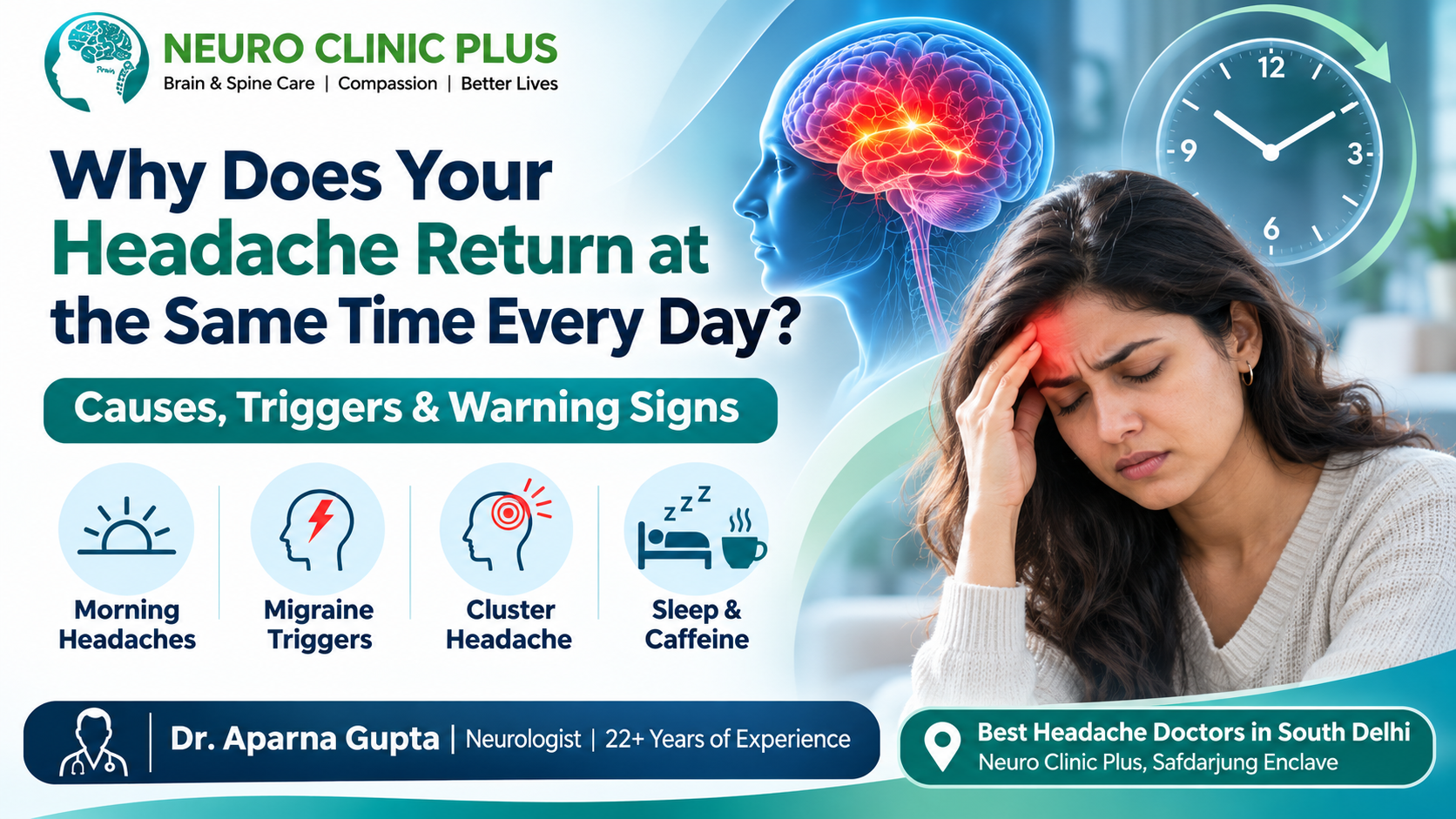
Have you noticed that your headache starts almost every day at 10 AM, after lunch, or just before bedtime? When head pain follows a predictable schedule, it can feel confusing, especially when you cannot identify an obvious trigger.
Recurring headaches at the same time may be associated with sleep patterns, migraine, cluster headaches, caffeine withdrawal, or everyday routines. However, timing alone cannot identify the cause.
For people searching for Best Headache Doctors in South Delhi, understanding the connection between headache timing and neurological health can help them recognize symptoms that deserve evaluation.
Let’s explore why headaches sometimes follow a daily pattern and when medical attention becomes important.
Why Does Your Headache Occur at Almost the Same Time Every Day?
Headaches that repeatedly appear at similar times may be linked to the body’s internal clock, recurring environmental triggers, or an underlying headache disorder.
Your body follows a roughly 24-hour biological cycle called the circadian rhythm. It influences sleep, wakefulness, hormone activity, and several neurological processes.
Research published in Neurology, the journal of the American Academy of Neurology, has identified associations between circadian rhythms and migraine and cluster headache.
However, a headache appearing at the same time does not automatically indicate a biological clock problem.
For example, a headache that develops every afternoon may coincide with missed meals, prolonged screen use, or changes in caffeine intake.
The most useful clues are the headache’s location, severity, duration, accompanying symptoms, and frequency.
What Causes Headaches to Return at the Same Time Each Day?
Several headache conditions and daily habits may explain recurring symptoms. Understanding their differences helps identify which patterns need further investigation.
1. Can Your Body Clock Trigger Headaches at Predictable Times?
Yes. Some headache disorders show associations with the body’s natural sleep-wake cycle.
The hypothalamus, a region of the brain involved in regulating biological rhythms, is connected to processes that influence sleep and headache activity.
Migraine attacks may appear at particular times in some individuals, although timing varies considerably between patients.
Changes in sleep schedules, night shifts, or irregular waking times can also influence headache susceptibility.
However, circadian timing is only one possible factor. A headache diary can help determine whether attacks genuinely follow a predictable pattern.
2. Why Do Cluster Headaches Often Strike at the Same Hour?
Cluster headaches are an important cause of severe, recurring headaches that may follow a strikingly regular schedule.
They typically produce intense pain around one eye, often accompanied by tearing, eye redness, nasal congestion, or restlessness.
Attacks generally last between 15 minutes and three hours and may occur repeatedly during a cluster period.
Some people experience attacks at similar times each day or night, including during sleep.
Because cluster headaches require specific treatment, severe one-sided headaches with eye symptoms should receive neurological assessment rather than being treated as ordinary tension headaches.
3. Can Poor Sleep Cause Headaches at the Same Time Every Morning?
Yes. Poor sleep quality, irregular sleep schedules, and certain sleep disorders can contribute to recurring morning headaches.
For example, obstructive sleep apnea may be associated with headaches upon awakening, particularly when accompanied by loud snoring or daytime sleepiness.
A rarer condition called hypnic headache develops during sleep and wakes the person, sometimes at predictable hours.
However, morning headaches have many possible explanations.
Persistent headaches that regularly wake you from sleep deserve medical evaluation, especially when they represent a new or changing pattern.
4. Can Skipping Meals or Delaying Coffee Trigger Daily Headaches?
Recurring headaches may coincide with everyday eating and drinking habits.
Long gaps between meals, inadequate hydration, and changes in caffeine consumption can contribute to headaches in susceptible individuals.
For example, someone accustomed to drinking tea every morning may experience a headache after unexpectedly delaying their usual caffeine intake.
Caffeine withdrawal can also worsen migraine symptoms in some people.
Tracking meal times, water intake, and caffeine consumption may reveal useful patterns.
Avoid abruptly increasing or stopping large amounts of caffeine without considering your usual intake and medical circumstances.
5. Why Do Headaches Start After Several Hours of Work?
Headaches developing at similar working hours may be associated with recurring activities rather than an internal biological rhythm.
Prolonged screen exposure, visual strain, stress, and uncomfortable neck positions can contribute to headache symptoms.
Tension-type headaches may cause pressure or tightness around the head, often without the nausea or pronounced sensory sensitivity associated with migraine.
However, screen use or posture should not automatically be blamed for persistent headaches.
Recurring symptoms deserve assessment when they become frequent, interfere with work, or change significantly.
6. Can Taking Painkillers Frequently Make Headaches Return Every Day?
Yes. Frequent use of certain medicines intended to relieve headaches can contribute to medication-overuse headache.
This condition may develop in people with existing headache disorders who repeatedly use acute headache medication over several months.
The risk depends on the medicine type and number of days it is taken.
Headaches may become more frequent or difficult to control, creating a cycle of repeated medication use.
Patients experiencing frequent headaches should discuss their medication history with a clinician rather than continually increasing doses.
How Can You Tell Whether a Daily Headache Is Migraine or Something Else?
A headache’s timing provides useful information, but the associated symptoms often reveal more.
Migraine commonly involves moderate-to-severe headache, sometimes throbbing, with nausea or sensitivity to light and sound.
Tension-type headaches often feel like pressure or tightness around the forehead or head.
Cluster headaches usually cause exceptionally severe one-sided pain near an eye, often with tearing and restlessness.
Other conditions can produce recurring headaches without fitting these patterns exactly.
A neurologist also considers whether headaches are brief attacks with pain-free intervals or continuous discomfort that worsens during particular hours.
The same daily timing does not mean every headache has the same underlying cause.
What Should You Record in a Headache Diary?
A headache diary is a practical tool for understanding recurring symptoms.
Record the following details for at least a few weeks, or as directed by your clinician:
- Starting time: When the headache begins.
- Duration: How long the pain continues.
- Location: Forehead, temples, back of the head, or around one eye.
- Severity: Pain intensity on a scale from 0 to 10.
- Associated symptoms: Nausea, dizziness, visual changes, or light sensitivity.
- Daily factors: Sleep, meals, caffeine, stress, and screen exposure.
- Medication: Name, dose, frequency, and response.
Look for patterns rather than assuming a single event caused every attack.
Bringing these records to a neurological consultation can make the assessment more informative.
How Does a Neurologist Diagnose Recurring Headaches?
Diagnosis generally begins with a detailed medical history and neurological examination.
A neurologist assesses headache frequency, duration, location, associated symptoms, medication use, and changes over time.
They may also examine vision-related symptoms, strength, coordination, and other neurological functions.
Imaging tests such as MRI are not automatically required for every recurring headache.
Further investigations may be recommended when symptoms or examination findings suggest a secondary cause.
The objective is to distinguish migraine, cluster headache, tension-type headache, and other conditions before selecting treatment.
Can You Prevent Headaches That Return at the Same Time?
Prevention depends on the underlying diagnosis.
Some people benefit from consistent sleep schedules, regular meals, adequate hydration, and appropriate stress management.
Others require migraine-specific preventive medication or targeted treatment for cluster headache.
Helpful measures may include:
- Maintaining regular sleep and waking times.
- Avoiding prolonged gaps between meals.
- Monitoring caffeine consumption.
- Taking appropriate breaks during screen-based work.
- Keeping a headache and medication diary.
- Following an individualized treatment plan.
Lifestyle changes can support headache management, but they cannot replace medical treatment for every headache disorder.
When Should Recurring Headaches Become a Medical Concern?
Regular headaches should be assessed when they become frequent, progressively worsen, disturb sleep, or interfere with daily activities.
Seek emergency care for a sudden, extremely severe headache or headache accompanied by weakness, confusion, speech difficulty, seizures, or loss of vision.
Fever with marked neck stiffness or a severe headache may also indicate an emergency.
New headaches after age 50, significant changes in headache patterns, or headaches associated with concerning medical conditions warrant timely assessment.
Do not assume that predictable timing makes a headache harmless.
About Dr. Aparna Gupta – Neuro Clinic Plus
Dr. Aparna Gupta is a neurologist with 22+ years of clinical experience in evaluating and managing neurological conditions, including migraine, recurring headaches, and complex headache disorders.
She holds an MBBS, MD (Medicine), and DNB (Neurology), with specialist neurology training at Sir Ganga Ram Hospital, New Delhi.
She serves as Director, Neurology at ISIC Multispeciality Hospital and provides consultations at Neuro Clinic Plus, Safdarjung Enclave.
For patients searching for Best Headache Doctors in South Delhi, Dr. Gupta offers neurological evaluation focused on understanding headache patterns, identifying warning signs, and selecting suitable treatment options.
Her approach emphasizes individualized care, clear communication, and appropriate follow-up.
Frequently Asked Questions (FAQs)
1. Why does my headache start at exactly the same time every day?
Recurring timing may relate to biological rhythms, migraine, cluster headache, sleep patterns, or repeated daily triggers.
2. Can migraine occur at a fixed time every day?
Yes. Some people experience migraine attacks at predictable times, although migraine patterns differ between individuals.
3. Are daily morning headaches a sign of a brain problem?
Not necessarily. Sleep disorders, migraine, and other conditions are possible causes. Persistent or changing headaches require evaluation.
4. Why does my headache develop every afternoon?
Potential contributors include missed meals, dehydration, work-related strain, and migraine triggers. Timing alone cannot confirm the cause.
5. Can stress cause headaches at the same hour daily?
Recurring stressful activities may contribute to headache symptoms at similar times, but other causes should also be considered.
6. Do cluster headaches occur at the same time every night?
They can. Cluster attacks sometimes follow predictable daily patterns and may wake people from sleep.
7. Can caffeine withdrawal cause recurring headaches?
Yes. Changes in regular caffeine intake can trigger headaches, particularly in susceptible individuals.
8. Can frequent painkiller use make headaches worse?
Yes. Overusing certain acute headache medicines can contribute to medication-overuse headache.
9. Should I get an MRI for recurring headaches?
Not everyone needs imaging. A neurologist recommends investigations based on symptoms, examination findings, and warning signs.
10. Can irregular sleep schedules trigger migraine attacks?
Yes. Changes in sleep duration or timing can contribute to migraine attacks in some individuals.
11. When should I consult a neurologist for daily headaches?
Seek assessment when headaches are frequent, changing, worsening, or affecting daily life. Sudden severe symptoms require emergency care.
12. How Can I Choose Among the Best Headache Doctors in South Delhi?
When searching for Best Headache Doctors in South Delhi, consider neurological qualifications, experience with headache disorders, thorough assessment, and follow-up care. Dr. Aparna Gupta provides headache and migraine consultations at Neuro Clinic Plus, Safdarjung Enclave.
Conclusion
Headaches returning at the same time every day may be associated with migraine, cluster headache, sleep disturbances, medication overuse, or recurring lifestyle factors.
Recognizing the pattern is useful, but the correct diagnosis depends on associated symptoms, medical history, and neurological examination.
If recurring headaches are affecting your daily routine, you can book a consultation with Dr. Aparna Gupta at Neuro Clinic Plus for appropriate assessment and personalized headache management.