A dementia diagnosis changes everything, not just for the patient but for the entire family. Watching a loved one struggle with memory, decision-making, or daily tasks is difficult, and finding the best dementia treatment in South Delhi often feels overwhelming when you don’t know where to start.
The good news is that dementia care has advanced considerably. With the right combination of medical treatment, therapy, and carer support, patients can maintain dignity and quality of life for much longer than many families expect. This guide breaks down what effective best dementia treatment in South Delhi actually looks like, why early action matters, and how to choose the right specialist for your family.
Understanding Dementia: More Than Just Memory Loss
Dementia isn’t a single disease. It’s an umbrella term for a group of conditions that affect memory, thinking, reasoning, and the ability to carry out everyday activities. Alzheimer’s disease is the most common cause, but vascular dementia, Lewy body dementia, and other conditions also fall under this category.
Because symptoms often develop slowly, families sometimes mistake early signs of dementia for normal aging. Forgetting appointments, repeating questions, or struggling to follow conversations can seem minor at first, but these are exactly the moments when seeking the best dementia treatment in South Delhi makes the biggest difference.
A qualified dementia specialist in Delhi NCR focuses on identifying the underlying cause through careful clinical evaluation and diagnostic testing, rather than treating symptoms in isolation. This distinction matters because different types of dementia respond differently to treatment, and an accurate diagnosis is the foundation of everything that follows.
Why Early Diagnosis Matters
- Slows disease progression through timely intervention
- Allows families to plan for long-term care
- Opens access to therapies that work best in early stages
- Reduces caregiver stress through early education and support
Our Treatment Approach: Structured, Evidence-Based Dementia Care
Effective best dementia treatment in South Delhi isn’t about a single pill or a one-time consultation. It’s an ongoing, structured plan built around the patient’s specific condition, stage, and lifestyle. The goal is twofold: manage symptoms in the present and slow progression over time.
Medication forms one pillar of treatment. Cholinesterase inhibitors and memantine are commonly prescribed medications that help regulate brain chemicals involved in memory and cognition. These don’t cure dementia, but they can meaningfully improve day-to-day functioning for many patients.
Supportive therapies form the second pillar. These include cognitive stimulation activities designed to keep the brain engaged, along with structured physical activity, which research increasingly links to slower cognitive decline. Managing behavioral symptoms such as agitation, confusion, or mood changes is also a core part of ongoing care.
Here’s what comprehensive dementia care typically includes:
- Cholinesterase inhibitors and memantine therapy
- Cognitive stimulation programmes tailored to the patient’s abilities
- Behavioural symptom management for agitation, anxiety, and mood changes
- Carer guidance and emotional support
- Home environment modification advice to reduce fall risk and confusion
Choosing a clinic that treats all five of these areas, not just medication, is what separates a good best dementia treatment in South Delhi from a truly comprehensive one.
Treatment Adjusts as Dementia Progresses
Dementia is a progressive condition, which means treatment isn’t static. What works well in the early stage often needs to be adjusted as symptoms evolve, and a good dementia specialist in Delhi NCR will revisit the treatment plan regularly rather than setting it once and leaving it unchanged.
- Early stage: Focus is on cognitive stimulation, lifestyle changes, and medication to slow progression. Patients are often still independent, so treatment also includes planning conversations with the family about the road ahead.
- Middle stage: Behavioural symptoms such as confusion, wandering, or mood swings tend to increase. Treatment shifts toward closer symptom management, structured daily routines, and more hands-on carer support.
- Later stage: Care becomes more supportive in nature, focusing on comfort, safety, and quality of life, with carers playing a central role alongside the medical team.
Non-Drug Therapies That Support Recovery
Medication is only part of the picture. Non-drug therapies play a meaningful role in dementia treatment in South Delhi and often work alongside prescribed medicines to improve day-to-day wellbeing.
- Cognitive stimulation therapy: Structured group or individual activities, such as puzzles, memory games, and discussion sessions, that keep the brain active and engaged.
- Physical activity: Regular, gentle exercise like walking or stretching supports circulation and has been linked to better mood and slower cognitive decline.
- Music and reminiscence therapy: Familiar music or guided conversations about past memories can reduce agitation and improve emotional connection, particularly in mid-to-late-stage dementia.
- Routine and structure: Predictable daily schedules reduce confusion and anxiety, helping patients feel more secure in their environment.
- Nutrition support: A balanced diet supports overall brain health and is often discussed as part of the broader care plan.
Building a Care Team Around the Patient
Effective dementia treatment rarely rests on one person alone. A neurologist typically works alongside other professionals, including physiotherapists for mobility support, psychologists for emotional and behavioral care, and trained caregivers or nursing staff for day-to-day assistance. Families are considered an essential part of this team, not just observers of the treatment process, since their daily observations often guide adjustments to the plan.
A Trusted Name in Neurology: Why the Right Specialist Matters
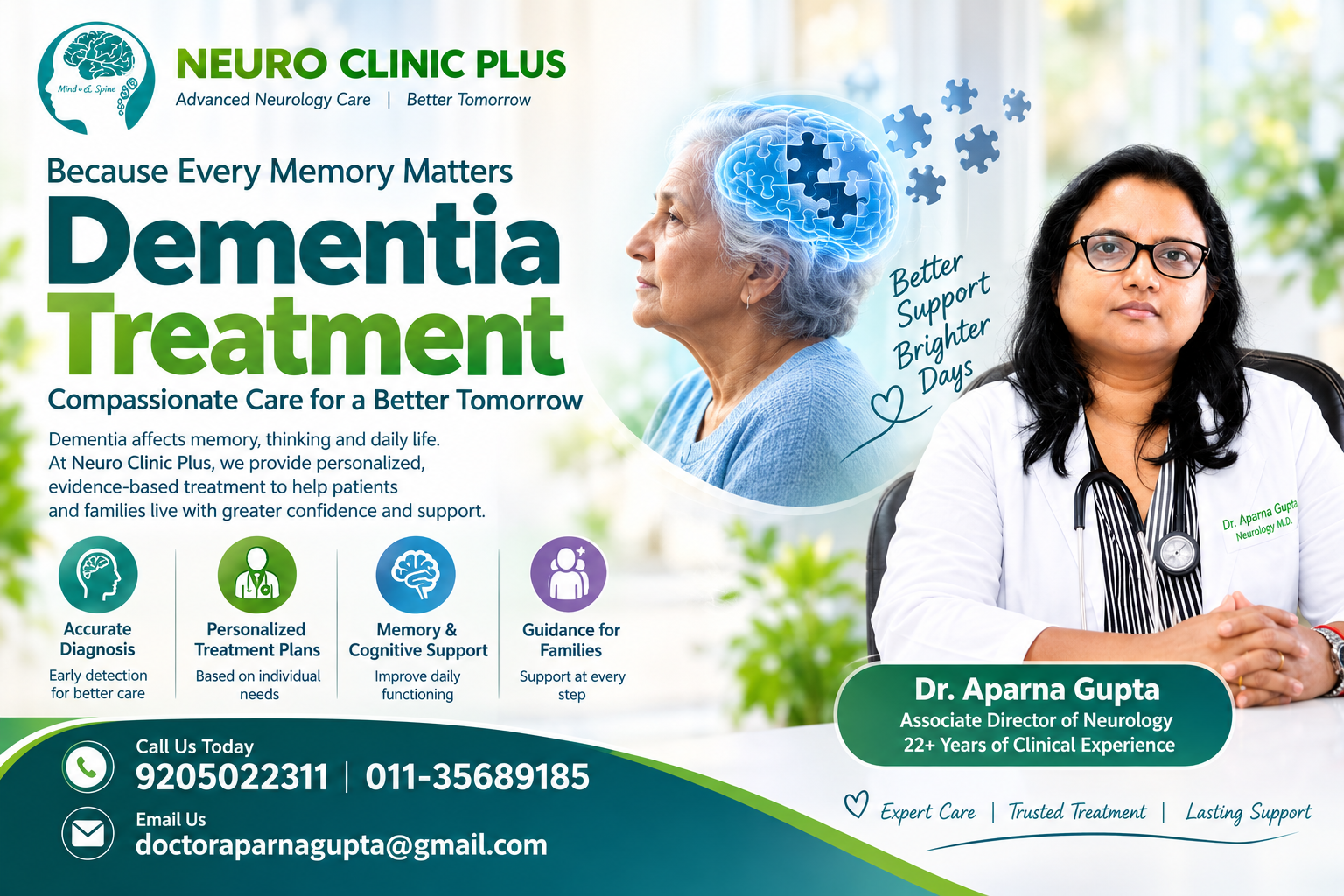
At Neuro Clinic Plus, patients receive expert and compassionate neurological care from Dr. Aparna Gupta, recognized as one of the best neurologists in South Delhi for dementia and other complex neurological conditions. She serves as Associate Director of Neurology at ISIC Multispeciality Hospital and brings over 22 years of clinical experience diagnosing and treating a wide range of neurological disorders.
At her clinic, patients receive personalised, evidence-based treatment for conditions including stroke, epilepsy, chronic headaches, vertigo, Parkinson’s disease, dementia, spine pain, peripheral neuropathy, brain infections, and autoimmune neurological disorders. This breadth of experience matters for dementia patients in particular, since memory symptoms can sometimes overlap with other neurological issues that need to be ruled out first.
Known for her patient-centric approach, accurate diagnosis, and advanced treatment methods, Dr Gupta focuses on improving quality of life through holistic and compassionate care. For families searching for the most reliable best dementia care in South Delhi, her clinic offers modern neurological solutions in a comfortable, supportive setting.
Why patients choose her:
- 22+ years of clinical experience in neurology
- Associate Director of Neurology, ISIC Multispeciality Hospital
- Treated thousands of patients across India and abroad
- Known for patience, empathy, and clear communication
Real Benefits, Real Challenges: What Families Should Know
Choosing the right approach to dementia treatment in South Delhi comes with both opportunities and challenges worth understanding upfront.
Benefits of structured treatment:
- Patients often retain independence longer with early intervention
- Families gain practical tools to manage daily challenges
- Behavioural symptoms become easier to anticipate and handle
- Care givers feel less isolated with proper guidance and support
Common challenges families face:
- Recognising early symptoms before they become disruptive
- Coordinating care between multiple family members or caregivers
- Adjusting the home environment safely without added stress
- Managing the emotional toll of a progressive condition
A good dementia specialist doesn’t just prescribe medication. They walk families through these challenges step by step, offering practical, realistic solutions rather than generic advice.
Why This Topic Matters Today
India’s ageing population is growing rapidly, and with it, the number of families navigating dementia for the first time. Urban centres like Delhi are seeing increased awareness but also increased demand for specialists who combine clinical expertise with genuine patient care.
At the same time, modern dementia treatment in South Delhi has moved well beyond outdated approaches. Today’s best practices combine medication, cognitive therapy, lifestyle changes, and care giver education into a single coordinated plan. This shift reflects a broader trend in healthcare: treating the whole family, not just the patient.
As more people search online for a reliable South Delhi dementia doctor, access to clear, trustworthy information becomes just as important as access to the treatment itself. Understanding what quality care actually looks like empowers families to ask the right questions and make informed decisions early, when it matters most.
Key Takeaways
- Dementia is an umbrella term covering several conditions, and accurate diagnosis is the first step toward effective treatment.
- Early diagnosis significantly improves long-term outcomes and gives families more time to plan.
- The best dementia treatment in South Delhi combines medication, cognitive therapy, behavioral management, and caregiver support.
- Choosing a specialist with broad neurological experience helps rule out overlapping conditions and ensures accurate care.
- Caregiver education and home environment changes are just as important as medical treatment.
- Dr. Aparna Gupta at Neuro Clinic Plus offers a structured, compassionate approach backed by over 22 years of experience.
Frequently Asked Questions
- What is the first step in getting dementia treatment in South Delhi?
The first step is a proper clinical evaluation with a neurologist who can confirm the diagnosis and identify the type of dementia involved. This helps rule out other treatable conditions that can sometimes mimic dementia symptoms.
- Can dementia be cured?
Dementia currently has no cure, but the right treatment plan, including medication, cognitive therapy, and lifestyle changes, can slow progression and help patients maintain independence for longer.
- At what age should someone be screened for dementia?
There is no fixed age, but memory concerns that interfere with daily life, regardless of age, should prompt a consultation with a dementia specialist in Delhi NCR. [Update or fact-check needed] for specific screening age guidelines.
- How long does dementia treatment usually take to show results?
Response times vary by patient and dementia type. Some families notice improvements in behavioral symptoms within weeks, while cognitive benefits from medication and therapy often build gradually over months.
- What support is available for caregivers?
A good dementia care plan includes caregiver guidance on communication techniques, home safety, and managing behavioral changes, along with emotional support to help prevent caregiver burnout.
- Is dementia treatment in South Delhi covered by insurance?
Coverage depends on the specific insurance provider and policy..
Conclusion
Dementia care isn’t just about managing a diagnosis. It’s about protecting quality of life for both the patient and the family around them. With the right combination of medical treatment, therapy, and support, the journey becomes far more manageable than it first appears.
If you or a loved one are navigating memory concerns, don’t wait for symptoms to worsen. Reach out to a trusted specialist, ask questions, and take the first step toward a treatment plan built around compassion and expertise. Share this article with a family member who might need it.