Waking up with sudden numbness, blurred vision, or unexplained muscle weakness can be frightening — especially when tests come back “normal” but the symptoms persist. For many patients, these signs eventually point to something the body itself is causing: an autoimmune attack on the nervous system. If you or a loved one is searching for the best autoimmune neurological disorder treatment in South Delhi, you are likely navigating confusion, conflicting opinions, and an urgent need for clarity.
Autoimmune neurological disorders occur when the immune system — which normally protects the body from infection — mistakenly attacks healthy nerve tissue in the brain, spinal cord, or peripheral nerves. Left undiagnosed or poorly managed, these conditions can progressively affect mobility, vision, cognition, and independence. But with early diagnosis, the right specialist, and a personalized treatment plan, most patients can manage symptoms effectively and maintain a good quality of life.
What Are Autoimmune Neurological Disorders?
Autoimmune neurological disorders are a group of conditions in which the immune system produces antibodies or immune cells that attack components of the nervous system — including the myelin sheath (the protective covering of nerves), neurons, or the neuromuscular junction.
Common Autoimmune Neurological Conditions
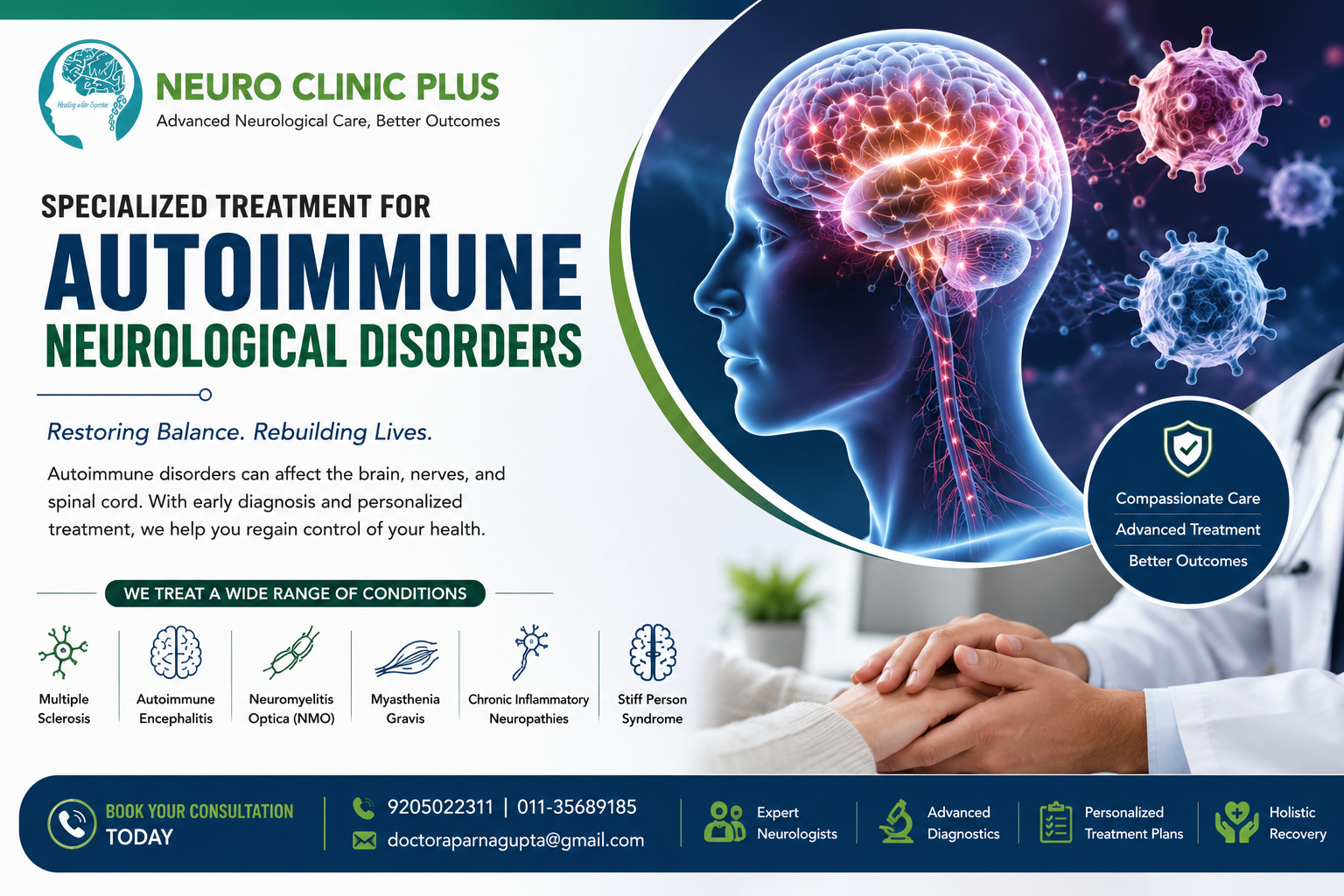
- Multiple Sclerosis (MS) — immune attack on the myelin sheath of the brain and spinal cord, leading to episodes of vision loss, weakness, numbness, and balance problems that may relapse and remit over time
- Neuromyelitis Optica Spectrum Disorder (NMOSD) — attacks primarily affecting the optic nerves and spinal cord, often more severe than MS and requiring a different treatment approach
- Autoimmune Encephalitis — inflammation of the brain caused by antibodies, often presenting with confusion, seizures, memory loss, or sudden psychiatric symptoms that can be mistaken for a mental health crisis
- Guillain-Barré Syndrome (GBS) — rapid-onset immune attack on peripheral nerves, causing ascending weakness and, in severe cases, paralysis that can affect breathing
- Myasthenia Gravis — antibodies attack the neuromuscular junction, causing fluctuating muscle weakness that typically worsens with activity and improves with rest, often first noticed in the eyelids or facial muscles
- Chronic Inflammatory Demyelinating Polyneuropathy (CIDP) — a slower-progressing cousin of GBS affecting peripheral nerves, causing gradual weakness and sensory loss in the arms and legs over weeks to months
- Autoimmune Peripheral Neuropathy — a broader category where the immune system targets peripheral nerve fibers, leading to tingling, burning pain, or numbness, frequently in a stocking-glove distribution
Each of these conditions has distinct symptoms, triggers, and progression patterns, but they share a common thread: the immune system turning against the nervous system instead of protecting it. Because symptoms often overlap with other neurological or even psychiatric conditions, misdiagnosis is common. This is why an accurate, timely diagnosis from an experienced neurologist for autoimmune disease near me is the essential first step toward effective treatment — rather than months of trial-and-error with the wrong specialist.
Early Signs and Symptoms to Watch For
Neurological Warning Signs
- Sudden or gradual vision loss, double vision, or eye pain
- Numbness, tingling, or weakness in limbs
- Difficulty with balance or coordination
- Unexplained fatigue that doesn’t improve with rest
- Muscle weakness that worsens with activity (a hallmark of myasthenia gravis)
- Rapid onset of limb weakness or paralysis (suggestive of GBS)
- Confusion, memory problems, or seizures (suggestive of autoimmune encephalitis)
- Bladder or bowel dysfunction
Symptoms Often Misdiagnosed
Many patients are initially told they have anxiety, vitamin deficiency, or stress-related fatigue before an autoimmune neurological condition is correctly identified. This delay can allow disease activity to progress. If symptoms are persistent, recurring, or worsening, a neurological evaluation — not just a general physician visit — is warranted.
What Causes Autoimmune Attacks on the Nervous System?
The exact trigger for autoimmune neurological disorders isn’t always clear, but research points to a combination of factors:
- Genetic predisposition — family history of autoimmune conditions
- Environmental triggers — viral infections, particularly Epstein-Barr virus, have been linked to MS
- Vitamin D deficiency — associated with higher MS risk, especially relevant given limited sun exposure in urban lifestyles
- Smoking and lifestyle factors — smoking is associated with faster disease progression in MS and poorer treatment response
- Post-infectious immune response — GBS often follows a bacterial or viral infection, typically appearing one to three weeks after a respiratory or gastrointestinal illness
- Hormonal factors — several autoimmune neurological conditions, including MS and myasthenia gravis, are more common in women, suggesting a hormonal influence on immune regulation
- Underlying tumors — in rare cases of autoimmune encephalitis, an underlying tumor triggers the antibody response, which is why cancer screening is sometimes part of the diagnostic workup
Understanding these risk factors doesn’t just help with diagnosis — it also informs long-term lifestyle recommendations as part of a comprehensive treatment plan. A specialist who takes the time to review your history in detail is better positioned to identify which of these factors may be relevant to your specific case.
How Are Autoimmune Neurological Disorders Diagnosed?
Step 1: Detailed Clinical History and Neurological Examination
A thorough evaluation of symptom onset, pattern, and neurological function forms the foundation of diagnosis.
Step 2: MRI of Brain and Spine
MRI imaging helps identify demyelinating lesions, inflammation, or structural changes characteristic of conditions like MS and NMOSD.
Step 3: Blood and Antibody Testing
Specific antibody panels (such as AQP4 for NMOSD, or NMDA-receptor antibodies for autoimmune encephalitis) help confirm the exact autoimmune process at play.
Step 4: Lumbar Puncture (CSF Analysis)
Cerebrospinal fluid analysis can reveal oligoclonal bands or inflammatory markers that support a diagnosis of MS or related conditions.
Step 5: Nerve Conduction Studies and EMG
For peripheral nerve conditions like GBS, CIDP, and myasthenia gravis, electrophysiological testing measures how well nerves and muscles are communicating.
Best Autoimmune Neurological Disorder Treatment in South Delhi: Available Options
Effective treatment isn’t one-size-fits-all — it depends on the specific condition, disease stage, and how the patient responds to therapy. A specialist offering the best autoimmune neurological disorder treatment in South Delhi will typically combine several of the following approaches:
1. Disease-Modifying Therapies (DMTs)
For chronic conditions like MS and NMOSD, DMTs work to reduce the frequency and severity of relapses by modulating immune system activity over the long term. These may be administered orally, via injection, or through periodic infusions, and the choice depends on disease severity, patient lifestyle, and how the condition is expected to progress. Regular blood monitoring is typically required to ensure the therapy remains safe and effective.
2. Immunosuppressive and Immunomodulatory Therapy
Medications that calm an overactive immune response are central to managing autoimmune encephalitis, CIDP, and myasthenia gravis. These therapies are carefully dosed and monitored, since suppressing immune activity too aggressively can increase infection risk — which is why ongoing specialist supervision is essential rather than a one-time prescription.
3. Corticosteroids for Acute Relapses
High-dose steroids, often administered intravenously over several days, are used to rapidly reduce inflammation during an active flare-up or relapse. While highly effective for short-term symptom control, they are typically not used as a long-term standalone solution due to side effects with prolonged use.
4. Plasmapheresis (Plasma Exchange) and IVIG
For acute, severe presentations like Guillain-Barré Syndrome or myasthenic crisis, plasma exchange or intravenous immunoglobulin (IVIG) can rapidly remove or neutralize harmful antibodies circulating in the blood. These interventions are often used in hospital settings and can be life-saving when respiratory muscles are affected.
5. Symptomatic Management
Addressing individual symptoms — spasticity, fatigue, pain, bladder dysfunction, sleep disturbances — significantly improves day-to-day quality of life alongside disease-specific treatment. This is often an underappreciated part of care, but it’s frequently what determines how a patient actually feels day to day.
6. Physical and Occupational Therapy
Rehabilitation therapy helps patients regain strength, coordination, and independence, particularly important during recovery from GBS or in progressive MS. A structured rehabilitation plan, started early and adjusted as recovery progresses, often makes a measurable difference in functional outcomes.
7. Lifestyle and Nutritional Support
Vitamin D supplementation, anti-inflammatory dietary guidance, adequate sleep, and stress management are often incorporated into a holistic care plan. While lifestyle changes alone cannot replace medical treatment, they play a meaningful supporting role in overall disease management and relapse prevention.
Who Should See a Specialist?
You should consult a neurologist experienced in autoimmune disorders if you experience:
- Sudden vision changes or eye pain
- Unexplained, progressive weakness or numbness
- Fluctuating muscle weakness that worsens through the day
- Rapid-onset limb weakness following a recent infection
- Cognitive changes, confusion, or new-onset seizures without clear cause
- Persistent fatigue combined with other neurological symptoms
Early evaluation matters. Many autoimmune neurological conditions respond significantly better to treatment when caught in their early stages, before permanent nerve damage occurs.
Why Location Matters: Choosing a Specialist in South Delhi
For patients managing a chronic autoimmune neurological condition, proximity to a trusted specialist isn’t a minor convenience — it directly affects treatment consistency. Conditions like MS and CIDP require regular infusions, blood monitoring, and follow-up MRIs, sometimes every few months. Traveling long distances for each appointment can lead to missed follow-ups, delayed dose adjustments, and gaps in care that allow disease activity to progress unchecked.
Choosing an autoimmune neurological disorder specialist in Delhi who is based in South Delhi — with access to both hospital-based infrastructure (for infusions, MRI, and emergency care) and a personal clinic (for detailed, unhurried consultations) — gives patients the best of both worlds. This is particularly valuable for residents of Vasant Kunj, Safdarjung Enclave, Saket, Green Park, Hauz Khas, and surrounding South Delhi neighborhoods, who can access comprehensive autoimmune neurological care without having to travel across the city during flare-ups or emergencies.
Living with a Chronic Autoimmune Neurological Condition
A diagnosis of an autoimmune neurological disorder is often just the beginning of a long-term relationship with your care team, not a single event. Understanding this can help patients and families set realistic expectations:
- Relapses and remissions are common in conditions like MS and NMOSD — a period of stability doesn’t mean the condition is gone, and continuing prescribed therapy during symptom-free periods is essential
- Fatigue is often invisible but disabling — many patients report fatigue as more limiting than physical symptoms, and it deserves to be discussed openly with your neurologist rather than dismissed
- Mental health support matters — living with a chronic, unpredictable condition can contribute to anxiety and depression; addressing this alongside physical treatment leads to better overall outcomes
- Family and caregiver involvement helps — understanding the condition together makes it easier to recognize early warning signs of a relapse and to support treatment adherence
- Work and lifestyle adjustments may be needed — but with proper management, most patients continue working, traveling, and maintaining active lives
Autoimmune Neurological Disorder Treatment: Comparison Table
Condition | Primary Treatment | Typical Course | Goal |
Multiple Sclerosis | Disease-modifying therapy | Long-term, ongoing | Reduce relapses, slow progression |
NMOSD | Immunosuppressants | Long-term, ongoing | Prevent attacks, protect vision/spinal function |
Autoimmune Encephalitis | Immunotherapy, steroids | Weeks to months | Resolve inflammation, restore cognition |
Guillain-Barré Syndrome | IVIG or plasmapheresis | Days to weeks (acute) | Halt progression, support recovery |
Myasthenia Gravis | Immunosuppressants, symptomatic therapy | Long-term, ongoing | Control muscle weakness, prevent crisis |
CIDP | IVIG, steroids, immunosuppressants | Long-term, ongoing | Maintain nerve function, prevent relapse |
Pros and Cons of Early vs. Delayed Treatment
Early Treatment
- Pros: Better long-term outcomes, reduced risk of permanent nerve damage, faster symptom control
- Cons: Requires prompt access to specialist diagnostics, which can involve upfront testing costs
Delayed Treatment
- Pros: None from a clinical standpoint — delay generally worsens outcomes
- Cons: Higher risk of irreversible neurological damage, longer recovery time, reduced treatment response
Common Mistakes Patients Make
- Dismissing early symptoms as stress, fatigue, or minor issues
- Self-medicating with over-the-counter remedies instead of seeking specialist evaluation
- Skipping follow-up appointments once initial symptoms improve
- Stopping disease-modifying therapy without medical guidance, risking relapse
- Relying solely on general physicians rather than a neurologist for ongoing autoimmune disease management
- Ignoring lifestyle factors like vitamin D levels, sleep, and stress that influence disease activity
Expert Tips for Managing Autoimmune Neurological Disorders
- Keep a symptom diary to track patterns and share with your neurologist
- Don’t skip scheduled MRIs or blood tests — they help catch disease activity before symptoms worsen
- Ask about vitamin D levels, especially if you have limited sun exposure
- Build a care team that includes physiotherapy and, where needed, occupational therapy
- Stay consistent with medication schedules, even during symptom-free periods
- Seek a second neurological opinion if your diagnosis remains unclear after initial testing
Why Choose Dr. Aparna Gupta for Autoimmune Neurological Disorder Treatment in South Delhi
Dr. Aparna Gupta is widely recognized as one of the best neurologists for autoimmune disorders in South Delhi, bringing over 22 years of clinical experience to the diagnosis and management of complex neurological conditions. She currently serves as Associate Director of Neurology at ISIC Multispeciality Hospital, Vasant Kunj, and also runs her personal practice, Neuro Clinic Plus, at B-4/18, Safdarjung Enclave, New Delhi.
Her clinical focus spans a wide range of autoimmune and complex neurological disorders, including multiple sclerosis, autoimmune encephalitis, and other conditions affecting the brain, spinal cord, and peripheral nerves — alongside stroke, epilepsy, chronic headaches, vertigo, Parkinson’s disease, dementia, spine pain, peripheral neuropathy, and brain infections.
Patients consistently highlight her patient-centric approach, diagnostic accuracy, and ability to explain complex conditions in clear, understandable terms — qualities that matter enormously when navigating a new or uncertain diagnosis.
- 22+ years of clinical experience in neurology
- Associate Director of Neurology, ISIC Multispeciality Hospital
- Treated thousands of patients across India and abroad
- Known for patience, empathy, and clear communication
Frequently Asked Questions
- What is an autoimmune neurological disorder?
It’s a condition where the immune system mistakenly attacks the brain, spinal cord, or peripheral nerves, leading to inflammation and nerve damage.
- What are the most common autoimmune neurological disorders?
Multiple sclerosis, autoimmune encephalitis, NMOSD, Guillain-Barré syndrome, myasthenia gravis, and CIDP are among the most frequently diagnosed.
- How do I find the best autoimmune neurological disorder treatment in South Delhi?
Look for a neurologist with specific experience diagnosing and treating autoimmune conditions, access to advanced diagnostics like MRI and antibody testing, and a track record of long-term patient management.
- Can autoimmune neurological disorders be cured?
Most are chronic conditions managed rather than cured, though early and consistent treatment can significantly control symptoms and prevent progression.
- What tests are used to diagnose autoimmune neurological disorders?
MRI imaging, blood antibody panels, lumbar puncture (CSF analysis), and nerve conduction studies are commonly used.
- Is Guillain-Barré Syndrome an emergency?
Yes — rapid progression of weakness requires immediate medical attention, as it can affect breathing muscles.
- What triggers autoimmune neurological flare-ups?
Infections, stress, vitamin D deficiency, and in some cases, missed medication doses can trigger relapses.
- How is myasthenia gravis different from other autoimmune neurological disorders?
It specifically affects the neuromuscular junction, causing fluctuating muscle weakness that often worsens with activity and improves with rest.
- Can lifestyle changes help manage autoimmune neurological conditions?
Yes — adequate vitamin D, stress management, regular physical therapy, and avoiding smoking can support overall disease management.
- How often should I see my neurologist for follow-up?
This varies by condition, but most chronic autoimmune neurological disorders require follow-up every 3 to 6 months, or sooner during active symptoms.
- Are autoimmune neurological disorders hereditary?
There’s a genetic predisposition in many cases, though having a family member with an autoimmune condition doesn’t guarantee you’ll develop one.
- What is the cost of autoimmune neurological disorder treatment in Delhi?
Costs vary based on diagnostics required, medication type, and whether hospitalization or infusion therapy is needed — a specialist consultation can provide a personalized estimate.
- Can autoimmune encephalitis affect memory permanently?
With early treatment, many patients recover cognitive function significantly, though the extent of recovery depends on how quickly treatment begins.
- Should I get a second opinion for an autoimmune neurological diagnosis?
Yes — given the complexity of these conditions, a second opinion from an experienced neurologist can help confirm diagnosis and treatment direction.
- When should I book a consultation for suspected autoimmune neurological symptoms?
As soon as symptoms are persistent, progressive, or interfere with daily function — early evaluation leads to better long-term outcomes.
Conclusion
Autoimmune neurological disorders can feel overwhelming, but an accurate diagnosis and the right treatment plan make a significant difference in long-term outcomes. Whether you’re dealing with symptoms of multiple sclerosis, autoimmune encephalitis, Guillain-Barré syndrome, or another autoimmune condition affecting the nervous system, seeking care from an experienced specialist offering the best autoimmune neurological disorder treatment in South Delhi is the most important step you can take.With a combination of advanced diagnostics, personalized disease-modifying therapy, symptomatic care, and rehabilitation support, most patients can regain stability and maintain a good quality of life.