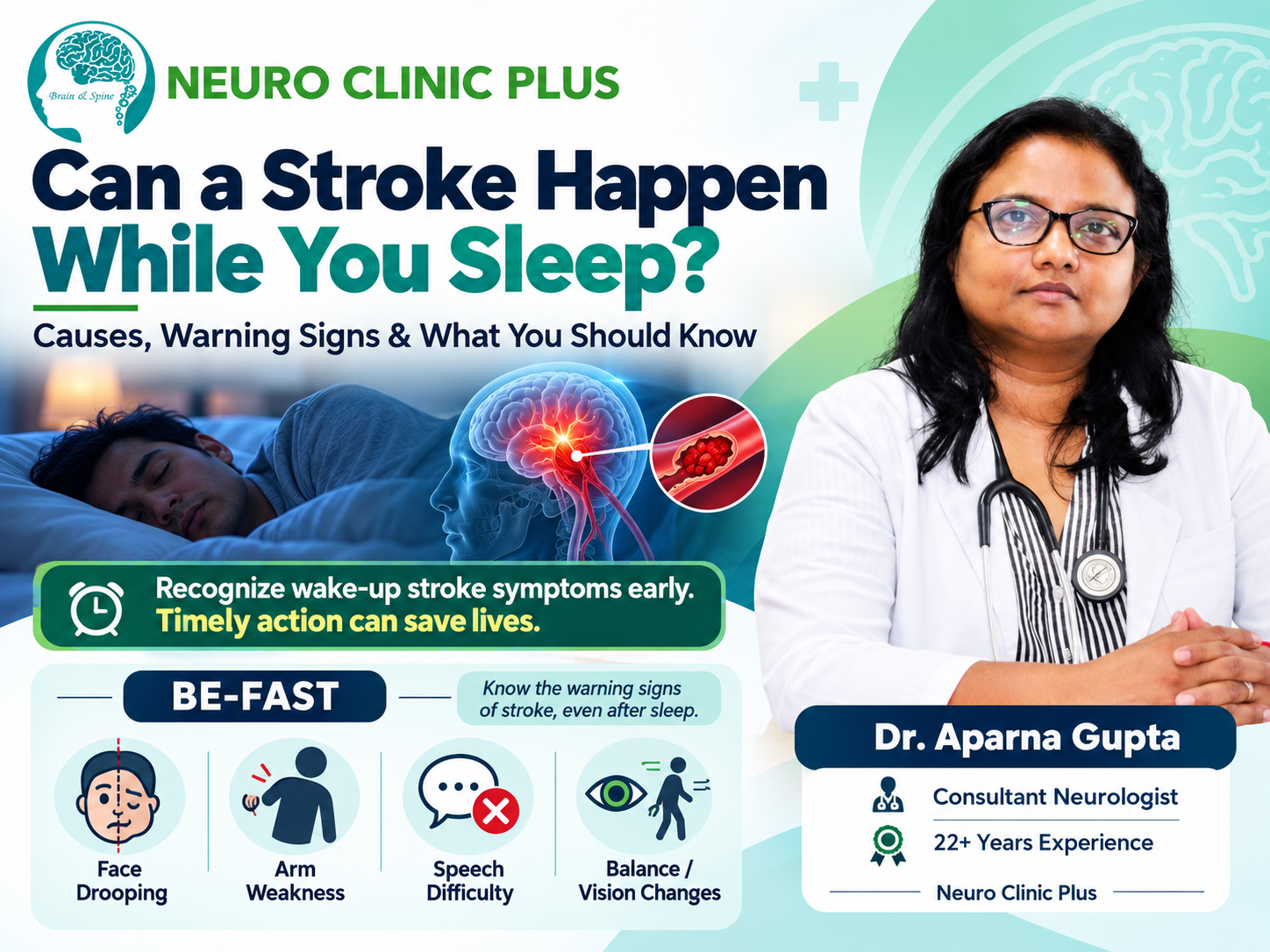
Imagine going to bed feeling perfectly healthy but waking up the next morning with difficulty speaking, weakness in one arm, or an unusual loss of balance. Such symptoms can be frightening, particularly when you have no idea when they started. A stroke during sleep, often called a wake-up stroke, is a medical emergency that requires immediate attention.
A stroke happens when blood flow to part of the brain is blocked or when a blood vessel ruptures. Although many people associate stroke with daytime activities, it can occur at any hour, including while someone is asleep.
Understanding wake-up stroke symptoms, possible risk factors, and emergency warning signs can help families respond quickly. Knowing what to do is especially important because delaying treatment may increase the risk of permanent brain damage.
What Is a Wake-Up Stroke?
A wake-up stroke occurs when someone goes to sleep without noticeable stroke symptoms but wakes up experiencing new neurological difficulties.
Because the person was asleep when the problem developed, the exact time of stroke onset is often unknown.
For example, someone may go to bed at 10 PM feeling normal and wake up at 6 AM with weakness affecting one side of the body.
Doctors refer to the last time the person was known to be functioning normally as the last known well time.
This information helps emergency teams assess treatment options.
Importantly, not knowing when a stroke began does not mean treatment is impossible. Modern imaging techniques can help doctors determine whether certain emergency treatments may still be beneficial.
What Causes a Stroke During Sleep?
The causes of stroke during sleep are generally the same as those of strokes occurring while someone is awake.
1. Blood Clots
An ischemic stroke occurs when a clot blocks an artery supplying blood to the brain.
The blockage prevents brain cells from receiving adequate oxygen and nutrients.
2. High Blood Pressure
Uncontrolled hypertension can damage blood vessels over time and increase the risk of both ischemic and hemorrhagic strokes.
3. Irregular Heartbeat
Atrial fibrillation is an irregular heart rhythm that can increase the risk of blood clots forming in the heart and travelling to the brain.
4. Diabetes and High Cholesterol
Diabetes and unhealthy cholesterol levels can contribute to blood vessel disease, increasing stroke risk.
5. Obstructive Sleep Apnea
Obstructive sleep apnea causes repeated interruptions in breathing during sleep.
It is associated with an increased risk of stroke, partly through its relationship with high blood pressure and cardiovascular problems.
Having sleep apnea does not mean a stroke will necessarily occur, but suspected symptoms deserve medical evaluation.
Warning Signs of Stroke After Waking Up
The signs of stroke after waking up may resemble those of a stroke that begins during the day.
Important warning symptoms include:
- Facial drooping: One side of the face appears uneven or weak.
- Arm or leg weakness: Sudden difficulty lifting or moving a limb.
- Speech difficulties: Slurred speech or trouble understanding conversations.
- Vision changes: Sudden blurred vision, double vision, or vision loss.
- Balance problems: Unexpected dizziness, poor coordination, or difficulty walking.
- Severe headache: A sudden, unusually intense headache, particularly when associated with other concerning symptoms.
These symptoms may appear individually or together.
If you wake up experiencing any sudden stroke-like symptom, seek emergency medical care immediately.
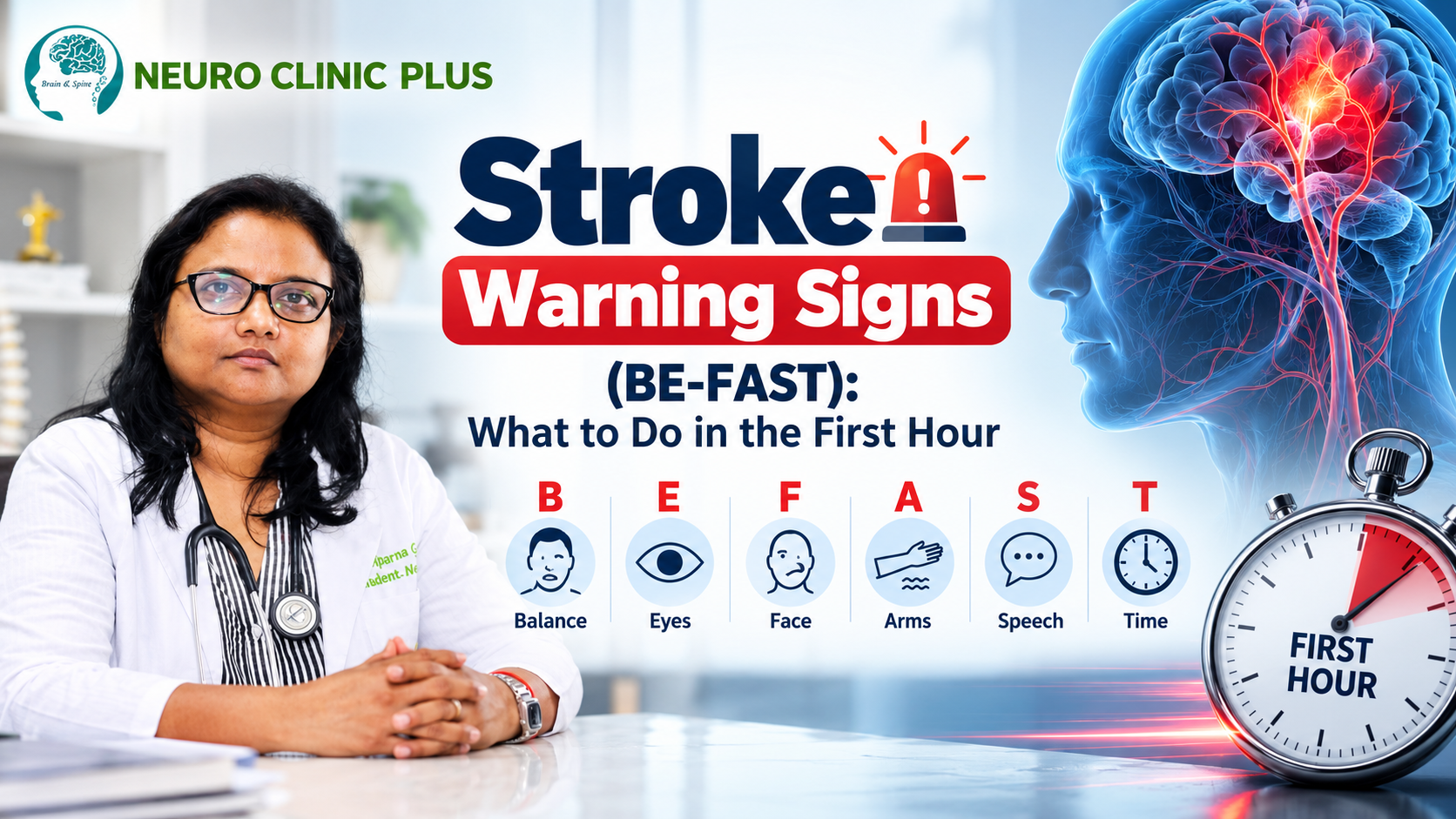
How Can You Recognize a Stroke Using BE-FAST?
The BE-FAST approach helps people remember common early signs of stroke.
- B – Balance: Sudden loss of balance or coordination.
- E – Eyes: Unexpected vision changes.
- F – Face: One side of the face droops.
- A – Arms: Sudden weakness in an arm.
- S – Speech: Difficulty speaking or understanding.
- T – Time: Contact emergency medical services immediately.
Not every stroke causes all these symptoms. A person may have only one warning sign.
What Should You Do If Someone Wakes Up With Stroke Symptoms?
A suspected wake-up stroke requires immediate hospital assessment.
Call emergency medical services. In India, dial 112 or the applicable ambulance emergency number.
Note the last known well time. Tell the medical team when the person was last observed without symptoms, such as before going to sleep.
Avoid food, drinks, or medication. Swallowing may be affected. Do not give aspirin without medical advice because the stroke might involve bleeding.
Do not wait for improvement. Symptoms that disappear may indicate a transient ischemic attack, which also requires emergency assessment.
Avoid driving. Emergency ambulance transport is preferable when available.
Even if several hours have passed since bedtime, hospital treatment may still be possible for selected patients.
How Is a Stroke During Sleep Diagnosed?
Emergency doctors first assess neurological symptoms and determine whether the stroke involves a blocked or bleeding blood vessel.
CT Scan and MRI
Brain imaging helps identify bleeding, areas of brain injury, and possible blood vessel blockages.
Advanced Brain Imaging
In selected cases, specialized MRI or CT perfusion imaging can help determine whether potentially recoverable brain tissue remains.
Heart and Blood Investigations
Doctors may assess blood glucose, heart rhythm, blood pressure, and other factors to identify possible contributing conditions.
These investigations help guide urgent treatment decisions.
Can a Wake-Up Stroke Be Treated?
Yes. Some patients experiencing a wake-up stroke may qualify for emergency treatment, even when the exact onset time is unknown.
For selected ischemic strokes, advanced imaging may help doctors determine whether clot-dissolving treatment is appropriate.
Patients with certain large-artery blockages may be eligible for mechanical thrombectomy, a procedure that removes a blood clot using specialized equipment.
In selected patients, thrombectomy may be considered up to 24 hours from the last known well time.
Treatment decisions depend on imaging findings, medical history, stroke severity, and other clinical factors.
Not every patient qualifies, and treatment must take place in an appropriately equipped hospital.
Never assume it is too late to seek emergency treatment simply because the symptoms were discovered after waking.
How Can You Reduce the Risk of Stroke?
Although not every stroke can be prevented, several habits can help manage important stroke risk factors.
- Monitor and manage blood pressure.
- Keep diabetes and cholesterol under appropriate control.
- Avoid smoking and tobacco products.
- Maintain regular physical activity.
- Follow a balanced diet with limited excess salt.
- Seek assessment for suspected sleep apnea.
- Take prescribed medicines consistently.
These stroke prevention tips are particularly important for people with previous strokes, heart conditions, or multiple cardiovascular risk factors.
About Dr. Aparna Gupta – Neuro Clinic Plus
Dr. Aparna Gupta is an experienced neurologist with 22+ years of experience, associated with Neuro Clinic Plus in Safdarjung Enclave, South Delhi.
She holds MBBS, MD (Medicine), and DNB (Neurology) qualifications and provides neurological consultation for stroke-related concerns and other neurological conditions, including migraine, epilepsy, vertigo, Parkinson’s disease, and neuropathy.
For patients recovering from a stroke, neurological follow-up may help assess ongoing symptoms, review risk factors, and support long-term management.
Frequently Asked Questions (FAQs)
1. Can a stroke really happen while sleeping?
Yes. A stroke can occur during sleep, and symptoms may only become noticeable after waking up.
2. What is a wake-up stroke?
A wake-up stroke is a stroke discovered when someone wakes up with new neurological symptoms that were not apparent before sleeping.
3. What are the first signs of a stroke after waking?
Common symptoms include facial drooping, one-sided weakness, speech difficulties, sudden vision changes, and loss of balance.
4. Can a stroke during sleep cause death?
Yes. Severe strokes can be life-threatening, particularly without timely emergency medical treatment.
5. Can high blood pressure cause a stroke at night?
Uncontrolled high blood pressure increases the overall risk of stroke, including strokes that occur during sleep.
6. Is sleep apnea linked to stroke?
Yes. Obstructive sleep apnea is associated with increased stroke risk and deserves appropriate medical assessment.
7. Can someone recover completely from a wake-up stroke?
Some patients recover substantially, while others experience lasting difficulties. Recovery depends on the stroke’s severity, location, treatment, and rehabilitation.
8. Is morning dizziness always a symptom of stroke?
No. Morning dizziness has several possible causes, but sudden severe imbalance or dizziness accompanied by neurological symptoms requires emergency evaluation.
9. How do doctors know when a stroke occurred during sleep?
The exact onset time may remain unknown. Doctors use the last known well time, medical history, and brain imaging to guide decisions.
10. Can a wake-up stroke be treated after several hours?
Yes. Selected patients may qualify for emergency treatment based on advanced imaging and clinical eligibility. Immediate hospital assessment remains essential.
11. Can lifestyle changes prevent stroke during sleep?
Healthy habits and proper management of medical risk factors can reduce stroke risk, but no lifestyle strategy guarantees complete prevention.
12. Where can patients seek neurological follow-up after a stroke in South Delhi?
Patients requiring planned stroke-related neurological follow-up can enquire about consultation with Dr. Aparna Gupta at Neuro Clinic Plus in Safdarjung Enclave, South Delhi.
Conclusion
A stroke during sleep can happen without any noticeable warning, leaving a person to discover symptoms only after waking. Recognizing sudden weakness, facial drooping, speech difficulties, vision changes, or balance problems is essential for taking immediate action.
Although the exact time of a wake-up stroke may be unknown, emergency treatment can still benefit selected patients. Therefore, symptoms should never be ignored or dismissed simply because they appeared overnight.
Managing blood pressure, diabetes, heart conditions, and other stroke risk factors can also support long-term brain health.
For planned neurological assessment after a stroke, Dr. Aparna Gupta at Neuro Clinic Plus, South Delhi, provides consultation for stroke-related concerns, recovery, and ongoing neurological care.
If you suspect a stroke, seek emergency hospital care immediately. Every minute matters.